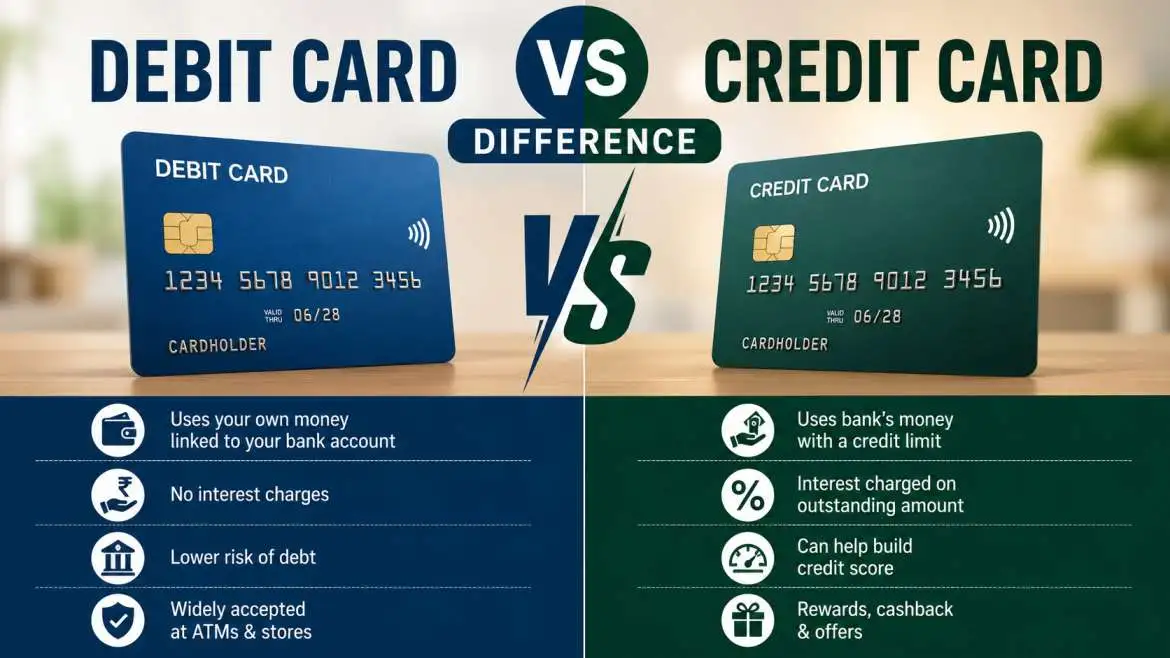
The main debit card vs credit card difference is simple: a debit card uses your own money from your bank account, while a credit card uses borrowed money from the bank that you must pay back later . With a debit card, you can only spend what you have in your account, which means you cannot go into debt. A credit card lets you borrow money up to a certain limit, and you get a bill at the end of the month.
If you pay the full bill on time, you usually pay no extra charges. But if you pay late, high interest fees can apply. In India, both cards are widely used for shopping, online payments, and ATM withdrawals .
Understanding the Debit Card vs Credit Card Difference
The Source of Funds Makes All the Difference
With a debit card, you are spending your own money. When you buy something, the money leaves your bank account right away. It is just like paying with cash, but easier.
With a credit card, you are borrowing money. The bank pays the shop for you. Then you get a bill to pay the bank back. This is called a line of credit .
You may also read :- Evolution of Digital Banking in India: A Complete Guide
How Spending Limits Work for Each Card
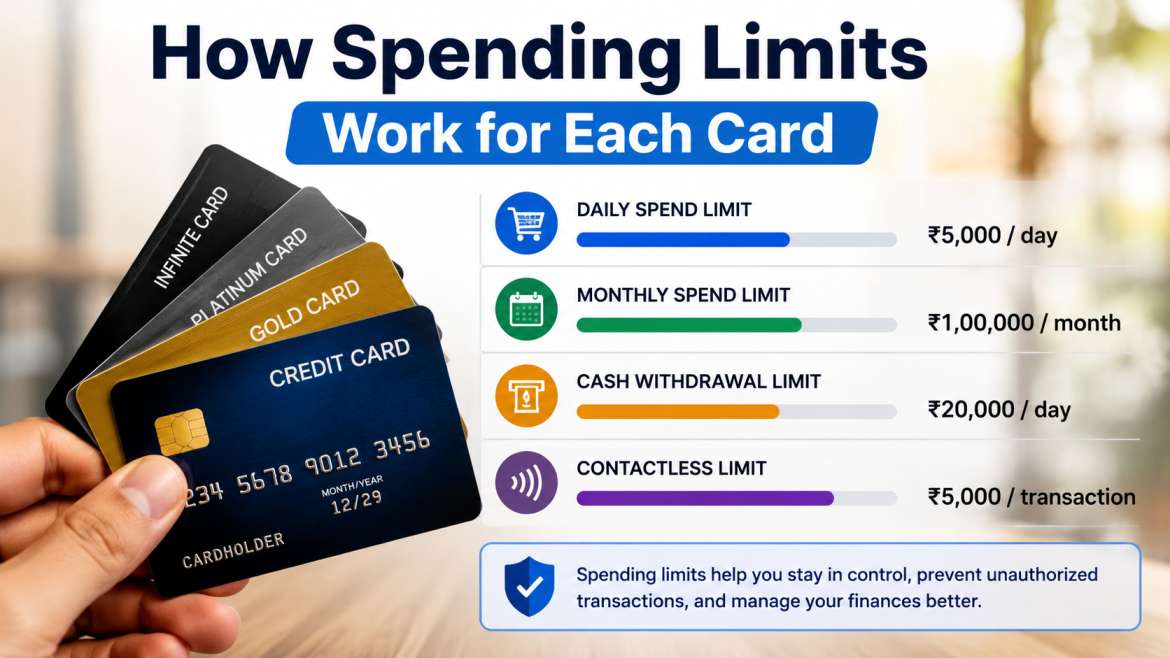
Your debit card limit is your bank balance. If you have Rs 10,000 in your account, you cannot spend more than that . This keeps you from spending money you do not have.
Your credit card has a credit limit. This is the maximum amount the bank lets you borrow. It is based on your income and credit score . You can spend up to this limit, even if you do not have that much cash right now.
Payment Timing and Repayment
For debit cards, payment happens instantly. The money is gone the moment you swipe or tap. For credit cards, payment comes later. You get a monthly statement. Then you have a grace period to pay the bill. In India, this grace period is usually between 17 to 50 days . If you pay in full by the due date, you pay no interest. If you pay late, the bank charges interest.
Debit Card vs Credit Card Difference India: What Makes Them Unique
Debit Cards Are Tied to Your Bank Account
When you open a savings account in India, the bank often gives you a debit card. This card is linked to your RuPay, Visa, or Mastercard network . You can use it almost everywhere.
You can use your debit card to:
- Withdraw cash from ATMs
- Pay at stores using POS machines
- Shop online on websites and apps
- Pay utility bills
- Use UPI for quick payments
Credit Cards Offer Borrowed Money with Perks
Credit cards are issued by banks and financial companies. They are not tied to your savings account. Instead, the bank gives you a credit limit.
Credit cards in India offer many benefits:
- Cashback on purchases
- Reward points you can use later
- Discounts on shopping and travel
- Airport lounge access
- Insurance on purchases
Fees and Interest: What You Need to Know
Debit Cards Have Low or No Fees
Debit cards are cheaper to use. Most banks do not charge a yearly fee for basic debit cards. Some premium cards have a small annual charge.
When you use a debit card:
- You pay no interest because you use your own money
- Cash withdrawals from your own bank's ATM are usually free
- Other bank ATMs may charge a small fee after free limits are used
Credit Cards Come with More Costs
Credit cards have several fees you should know about.
Interest charges are the biggest cost. If you do not pay your full bill on time, the bank charges interest. In India, this can be 35% to 48% per year . This is very high.
Other credit card fees include:
- Annual membership fees for some cards
- Late payment penalties
- Cash advance fees when you withdraw cash from ATMs
- Foreign transaction fees when you use the card abroad
Credit Scores and Perks: Building Your Financial Future
Your card choice can help or hurt your financial reputation.
Credit Cards Help Build Credit History
When you use a credit card responsibly, you build a credit history. This is a record of how you handle borrowed money. Paying your bills on time shows banks you are trustworthy. This helps when you apply for loans, home mortgages, or car loans in the future .
Debit Cards Do Not Build Credit
Debit card use is not reported to credit bureaus in India. Even if you use your debit card every day, it does not help your credit score . This is fine if you do not plan to borrow money. But if you want to build a good credit history, you need a credit card or loan.
Perks and Rewards Are Different
Credit cards offer better rewards. You can earn cashback, travel miles, and discounts . Some cards give you free access to airport lounges. Others give you insurance on travel and purchases.
Debit cards also offer rewards in some cases. But the perks are usually smaller. Basic debit cards may give you small cashback offers, but not as many as credit cards .
Debit Card and ATM Card Difference: Are They the Same?
Many people get confused about the debit card and ATM card difference. While the terms are often used the same way, they are different .
ATM Cards Are Limited to Cash Withdrawals
An ATM card was designed for one main job. You can use it to:
- Withdraw cash from ATMs
- Check your account balance
That is about it. ATM cards usually do not work for online shopping or store payments. They do not have a Visa or Mastercard logo. Instead, they use networks like Cirrus or Maestro .
Debit Cards Do Everything an ATM Card Does and More
A debit card is like an ATM card with extra powers. It can do everything an ATM card can do. But it also lets you:
- Shop online
- Pay at stores using POS machines
- Use contactless tap payments
In India today, most banks have stopped giving pure ATM cards. They give debit cards instead. Your debit card acts as both an ATM card and a shopping card. When you see an ATM logo on your debit card, it means you can use it to get cash .
Debit Card or Credit Card Which Is Better for Different Needs?
The question of debit card or credit card which is better has no single answer. It depends on your habits and goals .
Debit Cards Are Better for Daily Spending
Use a debit card for everyday purchases like:
- Groceries and food
- Mobile recharges
- Utility bill payments
- Small shopping trips
Debit cards help you stick to a budget. They keep you from overspending. You cannot buy something if you do not have enough money in the bank.
Credit Cards Are Better for Big Purchases
Credit cards work well for larger items such as:
- Airline tickets
- Electronics like phones and laptops
- Hotel bookings
- Emergency expenses
Credit cards are also better when you want purchase protection. If something goes wrong, credit card companies often help you get refunds .
Debit Cards Are Safer for Managing Debt
Debit cards have no debt risk. You only spend what you own. For students and people new to money management, debit cards are a smart start .
Credit cards can be risky. Without discipline, you can build up debt quickly. High interest rates make it worse .
Security and Fraud Protection
Keeping your money safe matters a lot when choosing cards.
Credit Cards Have Better Fraud Protection
Credit cards usually offer stronger protection against fraud. If someone uses your credit card without permission, the bank often limits your liability. Your actual money is not at risk because the bank owns the funds .
Debit Cards Directly Impact Your Bank Balance
With debit cards, fraud affects your real money immediately. If someone steals your debit card info, your bank balance can drop right away. Getting the money back can take time while the bank investigates .
Some banks have zero-liability policies for debit cards too. But the process of getting your money back can be slower than with credit cards .
The Trend in India: Debit vs Credit Card Usage
In India, the way people use cards is changing.
Debit Card Usage Is Declining
Debit card transactions in India have dropped sharply. From about 4.95 billion in 2019, they fell to 1.74 billion in 2024 . Why? UPI has taken over many everyday payments .
Credit Card Usage Is Growing
Credit card spending is going up. In April 2025, total credit card spending in India reached Rs 1.84 trillion. This was an 18% increase from the previous year .
However, more people are also facing credit card debt. Credit card arrears grew 44% to Rs 33,886 crore by March 2025. This shows many users struggle to pay their bills .
When to Use Which Card
Here is a simple guide for choosing.
| Situation | Best Card |
|---|---|
| Daily groceries and small shopping | Debit card |
| Online shopping with offers | Credit card |
| Emergency expenses | Credit card |
| ATM cash withdrawals | Debit card |
| Travel bookings | Credit card |
| Building credit history | Credit card |
| Staying within budget | Debit card |
| Paying utility bills | Debit card |
Expert Tips for Smart Card Use
"Budgeting is the key," says Amol Joshi from PlanRupee Investment Services. "As a student one is still dependent on parents for big-ticket expenses. What a student should manage on their own is to budget for planned & recurring expenses like travel, stationery, food expenses and so on" .
For those using credit cards, the advice is clear. Always pay your bill in full. Never just pay the minimum amount due. If you owe Rs 50,000 and only pay the minimum each month, it could take nearly nine years to clear the debt .
For debit card users, keep track of your balance. Avoid overspending by checking your account before you shop .
Conclusion
The debit card vs credit card difference comes down to how you want to spend. Debit cards keep you safe from debt and help you stick to a budget. Credit cards give you more flexibility, rewards, and a chance to build a credit history.
In India, both cards have their place. Use a debit card for your daily needs and small purchases. Use a credit card for big buys, travel, and times when you want extra protection .
The key is to be smart. Know your spending habits. Set limits for yourself. Always pay credit card bills on time. By understanding how each card works, you can make better money decisions. Pick the card that fits your life, not the other way around.
Frequently Asked Questions
Q1: What is the main debit card vs credit card difference?
A: The main difference is that debit cards use your own money from your bank account, while credit cards use borrowed money from the bank that you must repay .
Q2: Is debit card and ATM card same?
A: No, they are different. An ATM card is only for cash withdrawals, while a debit card can be used for cash, shopping online, and payments at stores .
Q3: Debit card or credit card which is better for students?
A: Debit cards are usually better for students. They help build good money habits and prevent overspending. Credit cards can be useful for emergencies but require discipline .
Q4: Do debit cards help build credit scores in India?
A: No, debit card use is not reported to credit bureaus. To build a credit history, you need a credit card or a loan that you repay on time .
Q5: Why are credit card interest rates so high in India?
A: Credit card interest in India ranges from 35% to 48% annually . This is high because credit cards are unsecured loans. The bank takes a risk by lending you money without any collateral.