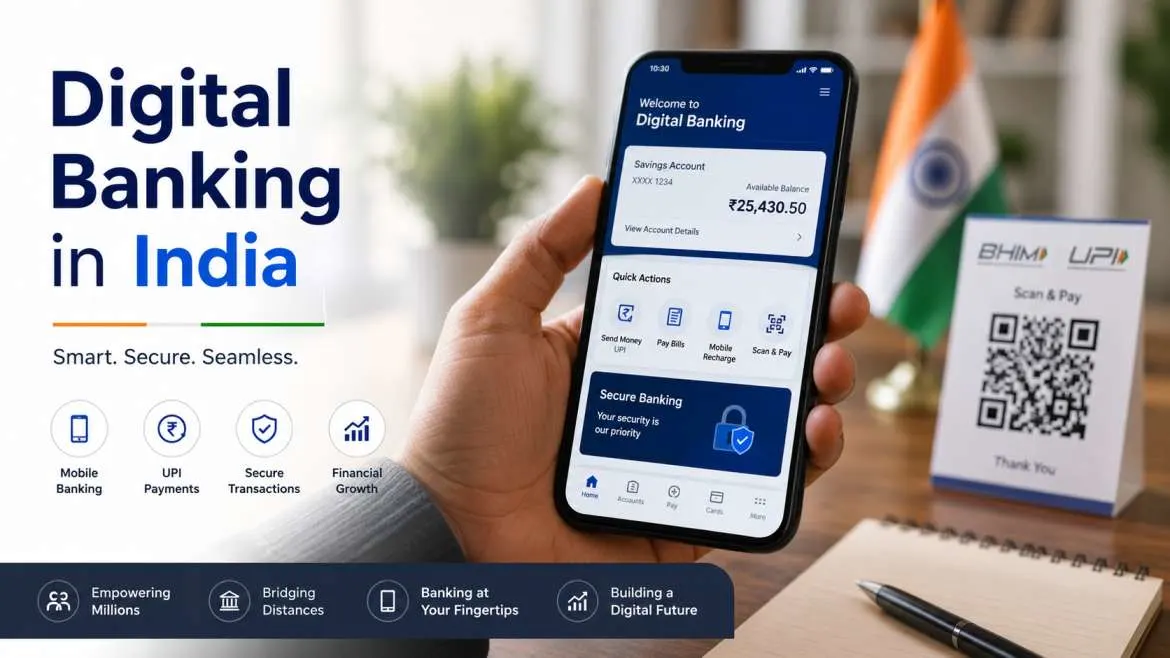
Digital banking in India means using smartphones and internet apps to manage your money instantly without visiting a bank branch. People across the country use mobile apps and scanning codes daily to pay for groceries, transfer funds, and open savings accounts in seconds. This online banking setup builds on government frameworks like the Unified Payments Interface to make everyday transactions secure and fast. Moving away from heavy paperwork makes your banking experience smooth while expanding financial tools to millions of citizens. Understanding this ecosystem gives you total control over your modern personal finance journey.
The Massive Scale of Digital Banking in India
The entire Indian financial layout experienced a huge shift over the last decade. Millions of people who never stepped into a real bank branch now manage their hard-earned money on portable mobile devices. The change happened fast, and it completely altered how regular citizens handle their everyday shopping, savings, and microfinance goals.
"The JAM Trinity catapulted our banking to a different level altogether." — Finance Minister Nirmala Sitharaman
According to recent economic updates, the Unified Payments Interface processed billions of separate transactions in single months. This incredible volume proves that mobile applications represent the main path for retail money movement nationwide. Regular people completely trusted these web systems, turning physical cash usage into an outdated habit.
Core Pillars of the Ecosystem Digital Banking
    [JAM Trinity: The Base Infrastructure]
         │
         ├── Pradhan Mantri Jan-Dhan Yojana (Massive Account Creation)
         ├── Aadhaar System (Instant Identity Verification)
         └── Mobile Connectivity (High-Speed Rural Data Networks)
The underlying platform that keeps this entire machine working rests on a structural breakthrough called the JAM Trinity. This foundation combines three completely distinct public assets that allow companies and traditional banks to serve users instantly at a very minimal operational cost.
You may also read :- New UPI Rules April 2026: Why Your Payments Are Failing and How to Fix It
Pradhan Mantri Jan-Dhan Yojana
This government initiative brought over 56 crore citizens into the formal financial sector by setting up zero-balance accounts. It removed old blockades that previously stopped underserved populations from entering traditional systems, creating the initial user base for web-based services.
Aadhaar Identity Verification
The national biometric database allows financial services to verify a customer identity within seconds using paperless procedures. This digital identity layout replaces old physical verification methods, making account setup easy, cheap, and completely digital.
Rapid Mobile Connectivity Expansion
High-speed internet networks reaching deep into remote rural areas form the third vital pillar. Without reliable mobile signals and low-cost data packages, rural consumers could not use automated apps, making network growth essential for national adoption.
Exploring the Future of Digital Banking in India
The forward path for this sector goes far beyond just scanning code images at local neighborhood shops. Emerging web tools aim to introduce automated systems that make credit and personalized advice accessible to every single smartphone user.
Conversational Voice Payments
New banking software updates bring voice-enabled payment setups utilizing language models to help users who cannot read text. People can speak directly to their devices in local native languages to execute safe transactions, breaking down literacy barriers completely.
The Rise of Virtual Rupee Pilots
The Reserve Bank of India continues testing its central bank digital currency to make currency distribution modern and trackable. This initiative builds an advanced layer for offline micropayments, allowing users to complete transactions without needing an active internet connection.
Embedded Finance Across Daily Platforms
Financial tools are embedding directly into non-banking retail apps, travel platforms, and food delivery systems. This integration allows consumers to secure instant loans, buy coverage policies, or utilize digital wallets exactly when making everyday purchases.
Digital Banking Key Benefits for Regular Users
Transitioning into paperless web tools offers massive advantages that directly impact your personal budget and time management. Automated digital systems run continuously to ensure that people get assistance whenever they need it.
- Continuous 24/7 Service Availability: Automated software infrastructure works around the clock without taking holidays or closing early, letting you transfer funds at any hour.
- Zero Routine Operation Costs: Web banks do not spend money maintaining hundreds of large physical branch locations, allowing them to eliminate standard transfer fees for users.
- Unmatched Everyday Convenience: You can request customized loans, invest in mutual funds, or monitor your balances from home without waiting in long public lines.
Digital Banking Security & Fraud Protection Measures
As millions of citizens move their money online, keeping digital platforms safe from cyber criminals becomes the highest priority for Indian institutions. Modern protection mechanisms use layered defense structures to block unauthorized account access.
                  [User Authorization Request]
                               │
                ▼──────────────┴──────────────▼
       [Biometric Check]               [AI Behavioral Scan]
    (Fingerprint or Face)             (Scans Typos/Swipes)
                ▲──────────────┬──────────────▲
                               │
                               ▼
                   [Transaction Approved]
Advanced biometric checks like facial recognition and fingerprint data verify identity before opening software dashboards. Meanwhile, automated artificial intelligence monitors transaction patterns in real-time to flag unusual spending spikes or weird locations, halting fraud before it hurts your wallet.
Traditional banks are also shifting toward zero-trust systems where every single data request requires verification. This constant checking keeps your savings safe, ensuring high consumer trust across all demographic groups.
Critical Digital Banking in India Notes for Learners
Students and professionals studying the national financial layout must track specific historical turning points to understand current operations. The growth from physical ledger books to cloud-powered platforms happened through calculated developmental steps.
- 2004: The introduction of Real-Time Gross Settlement automated large wholesale money movements between institutional entities.
- 2010: The Immediate Payment Service launched round-the-clock retail fund transfers for individual bank accounts.
- 2016: The National Payments Corporation of India rolled out the Unified Payments Interface, creating standard virtual addresses.
- 2022-2026: Digital Banking Units began opening across rural areas, offering fully automated, paperless, on-demand customer onboarding.
Comparing Indian Banking Layouts
Understanding the specific differences between traditional institutions and new online platforms helps consumers choose the right financial home.
| Characteristic Feature | Old Traditional Banks | Modern Digital Platforms |
| Physical Infrastructure | Large brick buildings with local neighborhood offices. | Fully cloud-based operations with zero real public spaces. |
| Account Creation Speed | Requires physical forms and takes multiple business days. | Uses biometric data for instant account opening. |
| Routine Service Fees | Charges money for checking balances and paper statements. | Offers free everyday access and basic fund transfers. |
| Rural Credit Flow | Slow loan checks based on physical asset papers. | Uses data analytics to provide fast automated credit. |
How Digital Public Infrastructure Changes Rural Towns
The introduction of modern mobile banking structures brought immense relief to rural farming communities across India. Previously, small village workers lost whole days of wages just traveling to distant city centers to deposit money or receive government subsidies.
Today, direct benefit programs send government funds straight into secure digital savings accounts without any middleman taking a cut. Furthermore, automated farming credit setups allow small agricultural workers to secure micro-loans right from their fields, giving them the working capital needed to buy seeds and tools without falling into predatory debt traps.
Simple Safety Steps for Smart App Users
While engineering teams work hard to protect backend servers, regular consumers must practice good security habits to defend their money. Following simple rules prevents most common online tricks.
- Never Share Secret Verification Codes: Your bank will never call to ask for one-time passwords or security pin numbers.
- Avoid Clicking Strange Text Links: Delete odd messages claiming you won cash prizes or need to update account profiles urgently.
- Check Scanning Codes Carefully: When paying local sellers, verify the displayed business name on your screen before typing your secret pin.
Expert Insights on National Modernization
Financial industry veterans highlight that India digital public infrastructure serves as an inspiration for global financial development. The deliberate choice to create open, shared public networks instead of proprietary corporate systems allowed small startup groups to innovate rapidly alongside massive historic banks. This cooperative environment drives down delivery costs for everyday citizens, making basic wealth management tools a standard public utility rather than an expensive luxury.
FAQ
Can I set up an online bank account without visiting an office?
Yes, you can complete the entire onboarding process from home using your mobile device. You just need your national identity card and a smartphone camera to finish the video verification process with a bank representative in minutes.
What should I do if a mobile payment fails but money leaves my account?
Do not worry because the automated settlement networks track every single transaction state. The architecture reverses stuck payments automatically, returning the funds to your account balance within a few business days.
Is there a maximum balance limit for basic offline mobile wallets?
Yes, national financial regulators set specific balance limits on light wallet options to minimize risk. These micro-payment tools usually cap your wallet balance at five thousand rupees to keep everyday pocket money separate from major savings.
Do online transactions work when mobile networks go down?
New software solutions enable offline payment vouchers and proximity technologies that do not require active cellular data. These tools allow consumers to settle small essential bills even when traveling through deep remote zones with poor signal coverage.

 in India.webp)