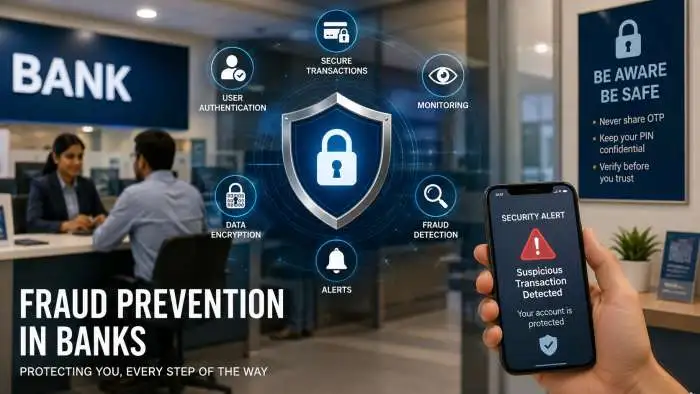
Fraud prevention in banks requires a unified approach using artificial intelligence, real-time risk tracking, strict identity checks, and strong security setups to shield customer assets and stop financial crimes. Banks utilize machine learning tools to review millions of transactions instantly, spot odd behavior, and stop fraud before it happens. As digital threats grow rapidly, modern financial systems deploy deep defensive layers.
These security frameworks include multi-factor verification, biometric logins, and immediate alerts that flag suspicious activity. These actions ensure that online banking stays safe, reliable, and smooth for every daily user.
What Are Banks Doing to Prevent Fraud?

You might wonder, "What are banks doing to prevent fraud?" The answer is plenty! Banks are fighting fraud in many ways. They use high-tech tools and smart strategies to keep you safe. It is a full-time job to stay one step ahead of criminals.
Smart Technology is the New Guard
Banks are using advanced tech to spot trouble. One major weapon is Artificial Intelligence (AI). AI can look at millions of transactions in seconds. It learns what normal activity looks like for your account. If it sees something odd, like a big purchase in another country, it can flag it. This is part of fraud detection and prevention in banking . Machine learning helps AI get smarter over time. It learns new tricks from fraudsters. This helps it catch new types of scams.
You may also read :- Latest RBI Guidelines for Banks 2026: Master Directions and Rules
Red Flags and Early Warnings
Banks use a system called Early Warning Signals (EWS) . Think of it like a fire alarm. The system watches for signs that something is wrong. For example, a sudden change in account activity. Or a request for a big loan from a risky customer. If an alarm goes off, the bank acts fast. They might investigate the account. They might even freeze it to stop a potential fraud . This proactive step is key to fraud prevention in banks.
Powerful Fraud Detection and Prevention in Banking Combos
Banks are getting smarter by combining teams. They are mixing fraud detection and prevention in banking with anti-money laundering efforts. This is often called FRAML . It helps banks see the whole picture of a crime. A stolen check might lead to identity theft. That could then lead to a big scam. By joining data, banks can connect the dots. They can catch criminals that they might miss otherwise. This shows how serious banks are about protecting you.
Stronger Rules from the RBI
The Reserve Bank of India (RBI) is also stepping up. They have issued new rules for banks. These rules make sure that banks have a strong plan for fraud prevention in banks . One key rule protects customers. If a bank is negligent, the customer has zero liability for a fraudulent online transaction. This means you are not held responsible for the bank's mistake. This pushes banks to be extra careful . It is a big step forward for customer safety.
Key Preventive Measures Banks Use
Banks also follow strict internal rules. They ensure staff follow all procedures. They check KYC documents carefully on the e-KYC portal . They also monitor accounts regularly. They keep keys and passwords safe. Surprise audits help find any gaps in security . Banks train their staff to spot fraud signs. This all-around effort is vital for fraud prevention in banks.
What are the 7 Types of Fraud in Banking?
Many people ask, "What are the 7 types of fraud?" The RBI has a clear list. These are the main categories banks watch for . Understanding these can help you stay safe.
The Official 7 Types
The RBI defines seven broad categories of banking fraud :
- Misappropriation and Criminal Breach of Trust: This is when someone dishonestly uses money or property they are trusted with. For example, an employee stealing cash from a till.
- Fraudulent Encashment: This involves using fake or forged documents to cash a cheque. It can also include manipulating the books of accounts or using fake accounts.
- Unauthorised Credit Facilities: This is when someone gets a loan or credit illegally. They might bribe a bank officer. Or they might use the bank's funds for their own gain.
- Negligence and Cash Shortages: This covers losses from carelessness. For example, cash being lost due to poor management. It also includes cases of simple theft.
- Cheating and Forgery: This is when someone tricks a customer or bank. They might forge signatures or documents to steal money.
- Irregularities in Foreign Exchange Transactions: This involves fraud in international money transfers. It can include illegal buying or selling of foreign currency.
- Other Types: This is a catch-all category for frauds not fitting the others. It includes things like cyber fraud or card fraud.
The Growing Threat of Cyber Fraud
While the official list is from RBI guidelines, we must mention cyber fraud. It is a huge and growing problem. Digital crimes often fall into the "other" category. Cyber fraud includes many things. Phishing emails trick you into giving passwords. Vishing uses phone calls to get personal info . Smishing uses fake text messages. Banks are working hard to fight these. But you must also be careful. This is one of the top 3 types of fraud by volume now.
Your Role in Fraud Prevention in Banks
You also play a part. Do not share your PIN or OTP with anyone. Banks will never ask for these details. Be careful about what you click on. Check your bank statements regularly. Report any suspicious activity at once. The sooner you report a fraud, the easier it is to fix. This helps the bank with fraud detection and prevention in banking.
What are the Top 3 Types of Fraud We See?
It is useful to know the "top 3 types of fraud." This helps you understand where the biggest risks are. While the RBI has seven categories, some types happen more often. Here are the most common ways people lose money.
1. Credit Card and Debit Card Fraud
This is one of the most common types. Crooks can steal your card information in many ways. Skimming devices on ATMs can copy your card's data. Data breaches at stores can leak your card numbers. Online scams can trick you into entering your details on fake websites . Once they have your card number, they can make purchases. Banks are fighting this with smart algorithms. They can block suspicious transactions right away. They also encourage you to use safer payment methods like UPI.
2. Phishing, Vishing, and Smishing
These are social engineering attacks. They trick you into giving away your secrets. Phishing uses fake emails. The email might look like it is from your bank. It asks you to click a link and "verify" your account. Vishing is voice phishing. You get a call from someone pretending to be a bank executive. They ask for your OTP or PIN . Smishing is SMS phishing. You get a text with a dangerous link. Banks constantly warn customers about these tricks. They will never ask for personal details by phone or email.
3. Loan and Advance Fraud
Loan fraud is a big issue. This often involves cheating the bank to get money. For example, a person might use fake documents to get a loan. They might also get loans from many banks using the same property as security . This results in big losses for banks. To stop this, they now use data from a central registry called CERSAI.
This shows if a property is already being used for a loan. Banks also check documents carefully and verify the borrower's background . This is a critical part of fraud prevention in banks to protect public money.
Which is the No. 1 safest bank in India?
A common question is, "Which is the no. 1 safest bank in India?" Safety is a top priority for everyone. While safety can be judged in many ways, we can look at expert opinions and ratings. Safety comes from strong financial health. It also comes from good management and a solid plan for fraud prevention in banks.
Top Contenders for Safety
Based on expert analysis, two banks are often seen as the safest. These are the State Bank of India (SBI) and HDFC Bank. A major global rating agency, Moody's, has confirmed their strength. They have given both banks a stable outlook. This means they believe these banks are financially strong and well-run .
HDFC Bank
HDFC Bank is known for its strong financials. It has a huge retail customer base. This provides a very stable source of low-cost deposits. Moody's says HDFC Bank has strong asset quality. It is also very good at making a profit. Strong capital position means it can absorb any unexpected losses . This makes it a very safe choice.
State Bank of India (SBI)
SBI is the largest bank in India. It has a massive network across the country. This gives it a very wide base of deposits. Moody's notes that SBI has a diversified loan portfolio. This means it is not too dependent on one sector. Its earnings are strong. It also holds a large portfolio of government bonds. This provides an extra layer of safety . SBI is considered very safe for these reasons.
The "Safest" Bank Globally in India
It is also interesting to note that DBS Bank India, a subsidiary of a Singapore bank, has been named the "Safest Bank in Asia" many times. They won this title for 17 years in a row from Global Finance . This is a great achievement. While they are a foreign bank in India, they also operate here. This shows that there are different views on safety depending on how you measure it.
What Makes a Bank Safe?
Safety is about more than just size. It is about how a bank manages risk. Good corporate governance is vital. This means the bank is managed properly and with integrity. Having low levels of Non-Performing Assets (NPAs) is also key. NPAs are loans that people are not paying back. A safe bank has a strong and robust fraud prevention in banks policy. They protect their customers and their own money. Safety and fraud prevention go hand in hand.
Steps to Protect Yourself from Banking Fraud
Banks are doing a lot. But you need to do your part. Protecting yourself is easy. Just follow these simple steps. It can save you a lot of trouble.
Smart Habits for Everyday Banking
- Keep your PIN and OTP secret. This is the most important rule. Your bank will never ask for this information. If someone asks, it is a scam .
- Check your bank statements. Look for any charges you don't recognize. Report them to your bank immediately .
- Be careful with links. Don't click on links in suspicious emails or texts. Always type the bank's website address into your browser.
- Use strong passwords. Use a different password for your bank account than you use for other sites. Change them regularly.
Know the Warning Signs of a Scam
- Urgent requests for money. A common scam is a call from a "relative" in trouble. They ask for money. Always verify these stories.
- Offers that seem too good to be true. If something sounds amazing, it is likely a scam. It could be a fake lottery win or an offer for a loan with no interest.
- Pressure to act fast. Scammers want you to act without thinking. They will try to pressure you. If they say "do it now," it is a big red flag.
What to Do If You Are a Victim
First, stay calm. Then, call your bank right away. They have a 24x7 helpline for fraud reporting . Report the issue. Next, file a complaint with the National Cyber Crime Reporting Portal (cybercrime.gov.in). They also have a helpline at 1930. Quick action can help you get your money back. New RBI rules ensure you are protected if you act fast and it was the bank's fault . Reporting is a key part of fraud detection and prevention in banking.
Conclusion
Fraud is a serious threat. But the good news is that banks are taking it very seriously. They are using powerful technology and smart methods to fight it. From AI systems to new RBI rules, a lot is being done. The goal is to create a safer financial world for everyone. We learned about the official "7 types of fraud" and the most common "top 3 types of fraud". We also saw that banks like SBI and HDFC are very safe choices.
The main takeaway? Fraud prevention in banks is a team effort. Banks provide the tools and systems. And you, the customer, need to stay alert. By working together, we can make the banking system safer. Remember the simple steps: protect your PIN, check your statements, and think before you click. Stay safe and enjoy the ease of modern banking.
FAQ on Fraud Prevention in Banks
Q1: What is the number one rule to prevent banking fraud?
A: The absolute golden rule is to never share your PIN, password, or OTP with anyone. Your bank will never ask for these details. If someone does, they are trying to defraud you.
Q2: What is the new RBI rule that protects me from fraud?
A: A new RBI rule says you are not liable for a fraudulent digital transaction if it was the bank's fault. This includes if the bank didn't have strong security or didn't send you an alert. You must report the fraud to the bank quickly .
Q3: What is a "Red Flagged Account"?
A: A "Red Flagged Account" is a term from the RBI. It means an account is highly suspicious for potential fraud. The bank will watch it very closely and start a deep investigation .
Q4: How is AI helping my bank keep my money safe?
A: AI and Machine Learning are major game-changers. They monitor millions of transactions. They learn your spending habits. If an unusual transaction happens, it gets flagged immediately. This helps stop fraud in real time .
Q5: If I fall for a phishing scam and give my OTP, am I protected?
A: This is considered "customer negligence" under RBI rules. The bank may not be liable for the loss. They might limit your liability to a certain amount or hold you fully responsible. So, it is crucial you never share your OTP with anyone .
Q6: Are smaller banks less safe than bigger ones?
A: Not necessarily. Small Finance Banks and Payments Banks follow RBI rules too. However, larger banks like SBI and HDFC Bank often have more resources. They can invest more in advanced fraud prevention in banks technology. They also have stronger buffers to handle any financial trouble .

 in India.webp)