I remember sitting at my sofa a few years ago, staring at my bank statement. I had worked hard, saved a little money, but it was just sitting there. I felt this weird mix of fear and FOMO (fear of missing out). Everyone talked about the stock market, but it sounded like a foreign language. Words like "dividends" and "volatility" made my head spin. I was convinced that investing was a secret club for rich people with fancy calculators.
Then, I had a chat with my uncle, who isn't a Wall Street guy but has done pretty well for himself. He said something that stuck with me: "Investing isn't about getting rich quick; it's about not being poor later." That simple idea made me realize I didn't need to be a genius. I just needed a plan. I started small, made some mistakes, and learned a ton. Today, I want to share what I discovered: practical, Beginner-Friendly Investment Strategies that helped me go from nervous saver to confident investor.
Why I Stopped Saving and Started Investing (The "Why" Matters)
I have always believed that the answer was in saving and that was how it was always the case. Deposit cash in the bank, be a safe keep. And though cash is important, I came to know that inflation is a mute termite. It is gradually consuming the purchasing power of your money. That $100 I had under my mattress? It may not purchase even five hundred dollars of stuff the following year.
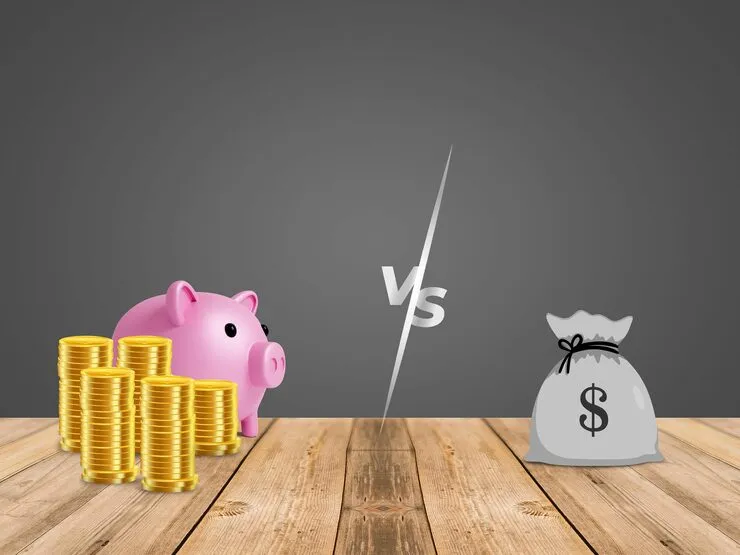
I learned in investing, that to make your money grow up and work, you have to invest. It is the way you create long term wealth creation. It is not only to retire at some point, but to be able to purchase a house one day, take that dream vacation or simply have a financial cushion that in fact is increasing. It is not aimed to win the market on the day to day basis; it is to be in the market at all times.
Step 1: The Foundation (Don't Build on Sand)
I needed to ensure that my financial house was stable on the ground before I could invest in the stock market by purchasing my first stock as it would not be on a beach where a wave could carry it away.
You may also read :- Smart Investing Moves to Make When Markets Turn Volatile
My First Rule: The Emergency Fund Is Non-Negotiable
This was the initial lesson that I learnt. You cannot afford investing when you will have to sell the investments whenever your car becomes faulty or when you suddenly have to pay a medical bill. Life happens. It’s not if, but when.
I also concentrated on creating what is commonly referred to as an emergency fund by the professionals. I also opened another high-yield savings account (not my regular checking account) and began depositing money in it. I wanted to save a sum of money to support my minimum living cost such as rent, food and utilities, in three or six months.
You must be able to get your ducks in a row… Basically you just need to be established, said investor Dave Ahern and I could not agree more. That cash buffer also led to the fact that I would invest without having panic because; in case things got off track, I was insured.
Tackling the "Bad" Debt Monster
One more thing I did was to look at my debt. Debt is not necessarily bad- a mortgage may be a weapon. However, high-interest debt such as credit card balances is an emergency. The good news is that, there is no better sure thing than paying off a credit card with an interest rate of 20%. It is much better than any stock market profit. I decided to kill off that debt, then.
The First Real Step: Picking My Beginner-Friendly Investment Strategies
I was now about to invest, now that my emergency fund was full and now that I no longer had any high-interest debt. It is here that Begginer-Friendly Investment Strategies magic works the best.
Strategy 1: The "Set It and Forget It" Approach (Index Funds and ETFs)
This was my strategy of choice since it involved the least number of guesses. I did not even have to choose what company was going to be the next big thing. I have just purchased a bit of all.
Why I Fell in Love with Low-Cost Index Funds

I have begun with an index fund that tracks the S&P 500. Imagine that S and P 500 is a list of the 500 largest American companies. By purchasing a unit of an S&P 500 index fund, I am not putting money on Apple alone or Amazon alone; I am putting money on the American economy as a whole. When a single company has bad day another one might have good day, which will even things out.
This is the form of passive investing. It’s low-effort and low-fuss. According to Stephen Yiu of the blue whale growth fund, ETFs are no effort no fuss and the best place to start as an investor. I would purchase these at a cheap price using my brokerage account and I did not need to watch them every second.
My Experience with ETFs (Exchange-Traded Funds)
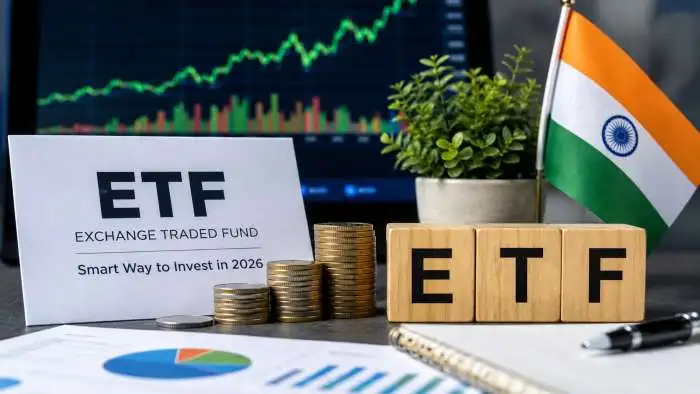
ETFs are the cool cousins of index funds. They are traded through the stock market but they carry a portfolio of other investments. I liked the fact that I could purchase a single share of an ETF and immediately hold microscopic portions of hundreds of various firms. This is what we refer to as instant diversification. This is attested by finance professor Robert R. Johnson who wrote that in the untrained opinion, a low-cost index ETF is the winner by far. It turned me into a smart person without the need to be a stock market guru.
Strategy 2: The Simple Math of the 60/40 Portfolio
I wanted to learn how to balance my money as I felt somewhat more comfortable. I came across one of the strategies that were developed by John Bogle, who founded Vanguard. It’s called the 60/40 portfolio.
Balancing Stocks and Bonds for Safety
It is simply a gorgeous concept and all you need is to invest 60 percent of your investment cash in stocks (growth) and 40 percent in bonds (stability). The bonds are simply loans that you provide to the government or companies and they are repaid with interest. They tend to be far more relaxed than stocks.
The stock market crazy down day makes the bonds generally remain stable, or even increase, which helps to decrease the decline. Such a combination assists in controlling investment risk. It is as though a balancing out of a seesaw. I was not so concerned that all my whole portfolio was on the stock market rollercoaster.
Strategy 3: Dollar-Cost Averaging (My Favorite Habit)
This is what altered my thinking which was that of a gambler to an investor. I made the same amount of money and invested the same amount, every month instead of putting money in or not in the market based on how the market behaved that specific month (this you cannot always do).
How I Stopped Trying to Time the Market
I have an automatic transfer that is set up with my bank to my brokerage account on the 1 st of each month. My money was in regardless of whether the market was up, down or sideways. This is referred to as dollar-cost averaging.
My given amount of money will purchase more shares when the market is down. It makes fewer purchases when it is good. In the long run, this equalizes the expense of my investments. It took the emotion out of it. The panics ended when the prices were lower since I clearly understood that I was indeed receiving a sale of the month.
Strategy 4: Letting the Robots Help (Robo-Advisors)
I was left to my own devices awhile. It was fun. However, I do not believe that all people want to read fund prospectuses on a Saturday morning. In case you prefer a hands-off strategy, I would be strong to recommend robo-advisors.
My Take on Automated Investing Platforms
Robo-advisors are computer-based applications that operate algorithms to manage your money. You respond to a couple of questions concerning your objectives and the extent to which you want to take risks (risk tolerance), and the robot constructs you a diversified portfolio of ETFs.
It will rebalance automatically, i.e. when your stocks get too big to keep your balance of 60/40, the robo-advisor will sell a few stocks and buy bonds until it gets back in balance. It is an extremely convenient practice of automated investing at low prices.
Read also:- Real Estate Investing: Tips for Maximum Returns
Keeping My Cool: The Psychological Game
Investing proved to be 10 percent figures and 90 percent actions. Controlling my emotions was more difficult than finding out what ETF was.
Why I Hid My Phone (Controlling Emotions)
I was checking my investment apps regularly in the beginning. The smallest dent caused me stomach pain. I have read an interview with investor Andrew Ahern who has proposed a drastic idea: uninstall the apps on your phone. He referred to this as a speedbump.
I did it. I ensured that I made it a bit difficult to be obsessively checking my balance. Out of sight, out of mind. It taught me to cease making emotional, unthoughtful judgments.
Ignoring the "Panic-Selling" Urge
It experienced a month when the market fell. I was even tempted to sell it all as a way of bleeding to death. But I recalled I had read panic-selling freezes up your losses. When you sell in the market when the market is at the down turn, then you create a temporary decline into a permanent loss. All you have to do is wait and history tells you that the market will recover. I clenched my fist and it reappeared. This experience taught me the strength of patience.
Keeping it Safe: Low-Risk Options I Explored
I do not have all my money in the stock market. I hold some of these in my so-called sleep well at night fund. They are low risk investment products.
The "Boring" Accounts That Pay Me (HYSA and CDs)
My high-yield savings account, I have already touched on. I have this as my emergency and short-term objectives (such as a vacation next year). It is secure, guaranteed and I can have my cash within a day.
I also invest money as Certificate of Deposit (CDs) in the money that I know I will not require within a certain time like 1 year or five years. I secure a marginally higher interest rate and it simply sits there accumulating. It is an ideal case of preservation of capital.
Government Bonds: Lending Money to Uncle Sam
My small portion of my portfolio is in Treasury securities. These are bonds issued by the U.S. government and can be regarded as one of the safest investments in the world since they are not only guaranteed by the full faith and credit of the government but are also guaranteed by the same. They do not make me rich but neither do they make me poor.
Learning From the Pros: Expert Advice I Follow
To ensure that I was not just making guesses, I referred to individuals who earn their living through the same.
On starting small:
You do not have to be a rich person to get started. I would begin with £100 (or less) says Claire Exley, a financial expert at Nutmeg. This was huge for me. I started with $50 a month. It does not matter how much but matters how the behavior.
On keeping it simple:
Carl Delfeld of Cabot Wealth Network tells investors to take it simple in order to succeed in investing. I would attempt to pursue complex stock-picking rules, and I ended up lost. A rescue was in returning to plain ETFs.
On staying the course:
"The real key is patience. Ride with it, and have patience until it smooths, and then leave it all to compounding, and it will work to your advantage in the long run, says Stephen Yiu . I am being able to post this quote on my wall. Compounding- this is when your money makes money, then the money makes more money, and so on. It begins gradually, although in decades, it becomes the snowball effect.
Conclusion: My Journey is Just Beginning
Retrospectively, I would advise my younger self to make light of it. One does not have to have a degree in finance to be a good investor. All you require is some safe Beginner-Friendly Investment Strategies, determination to follow them and time to pay time its due.
Begin with your emergency savings. Then open a brokerage account and purchase a low-cost ETF. Have automatic monthly payments. And then? Go live your life. Do not look at your portfolio on a daily basis. Trust the process. It is not about winning the market, it is about creating the life you want to live, with a future you are investing in now.
Frequently Asked Questions (Real Questions I Had)
Here are some of the questions that kept me up at night when I was starting my financial planning for beginners:
How much money do I really need to start investing?
Honestly, you can start with the cost of a pizza. Many brokerage apps now let you buy fractional shares, meaning you can buy $10 worth of a $300 stock . You don't need a lot of money; you need consistency.
Is it too late for me to start?
I asked myself this at 30, 32, and 35. The best time to plant a tree was 20 years ago. The second-best time is today . Even if you start later, the time you have now is valuable.
What if I lose all my money?
If your money is in a single stock, you could lose a lot. But if your money is in a broad diversified portfolio of an S&P 500 index fund, losing everything would mean every major company in America went bankrupt. In that scenario, we probably have bigger problems than your 401(k). Diversification is your safety net .
 in India.webp)