I remember staring at my first paycheck after landing my "big kid" job, feeling a mix of excitement and total confusion. I knew I should be doing something with my money besides letting it sit in a jar on my nightstand (okay, a savings account). But every time I Googled "investing," I was hit with a wave of confusing words and scary graphs. It felt like everyone expected me to already know what a "bull market" was.
I was terrified of making a mistake and losing the money I worked so hard for. I wanted to grow my savings, but I had zero clue how to start.
That's when a wise friend sat me down and drew a simple picture of a bunch of different eggs in different baskets. "Don't put them all in one," she said. "That way, if you drop one basket, you don't lose everything." That was my "aha!" moment. She was talking about diversification. And that was the day I decided to build a diversified portfolio from scratch.
It wasn't as hard as I thought it would be, and today, I’m going to walk you through the exact steps I took. By the end of this, you’ll feel ready to start your own journey.
What Does It Even Mean to Diversify?
Alright, we will simplify this down to a super simple. An example that you can use is to assume you are going to an ice cream shop and you purchase a cone that is scooped one time of your favorite flavor. You drop it, your dessert is lost, right? Bummer.
Suppose now that you purchase a large bowl of ice-cream having ten scoops. You have chocolate, vanilla, and mint chip the works! Should you fall and drop the bowl, you may lose one or two scoops, and yet you still have plenty of ice cream to eat.
The scoops are your investments in the money world. When you create a diversified portfolio yourself, you are creating that huge bowl of ice cream. You are diversifying your money in various categories of investments in such ways that in case one of them has a bad day (bad year) the rest of your money is intact, and is safe and sound. It is the time-old adage of not keeping all your eggs in the same basket.
You may also read :- High-Growth Assets to Watch This Year
Why I Absolutely Had to Learn About Risk?
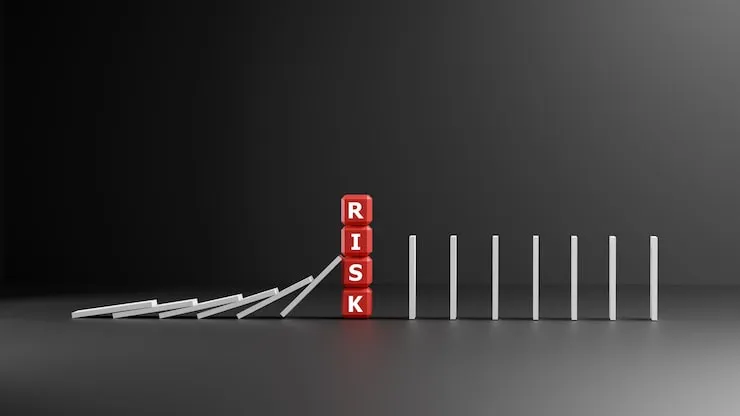
Prior to my selection of the initial investment choice, I needed to be truthful with myself regarding something frightening risk tolerance. It is merely an imaginative question of how much sleep may I lose at night and not panic.
There are roller coasters of investments. They go over so fast and come down so fast. It's a wild ride. The rest are rather like a lazy river. They go at slow and easy and you cannot fall out.
I also got to know that, in most cases, the riskier you are (the roller coaster), the more money you can potentially earn in the long run. But then you might lose money in a short period of time.
To identify my comfort zone, I posed two big questions to myself:
- When do I need this money? I had a long run horizon since I was making an investment that would not take effect until several decades had passed. This implied that I was able to make more rides on roller-coasters since I had enough time to recover on any dips.
- Is this money something I can spare? My finances were stable. I had a emergency fund on hand. This is called risk capacity. Since I had a good base to build on, I was able to be somewhat more aggressive in my investments.
My Simple Plan to Build a Diversified Portfolio From Scratch
After I realized that I was ready to ride the roller coaster at least a bit, I had to have a plan. A blueprint. It is easy to make emotional decisions without one. The following is the step-by-step procedure that I adhered to.
Picking My Perfect Asset Allocation
My first major choice was the asset allocation. This simply means, "What proportion of my money do I invest in the fast-growing stuff (stock) and what proportion of my money do I invest in the slow-and-steady stuff (bond)?"
There is a legendary old-school rule, referred to as the 60/40 portfolio, where 60 percent of the investment is stocks and 40 percent is bonds. It’s a classic for a reason. However, one pro, Ben Seager-Scott who is a chief investment officer at Forvis Mazars had a cooler idea that I liked even better.
He suggested a mix of:
- 60% in stocks (for growth)
- 30% in bonds (for stability)
- 10 per cent. in substitutes such as gold (added security)
This was good and stable means of creating a diversified portfolio but starting with a blank slate. It was not so mad but neither was it dull. This mix became my guide.
The Magic of Index Funds and ETFs (My New Best Friends)
Okay, this part is important. I had an idea that I would have stocks but what was I to do when choosing? Was I supposed to buy Apple? Or Coca-Cola? I had no idea.
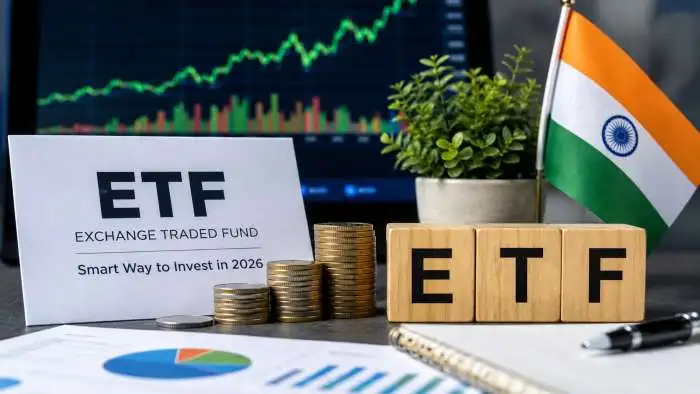
Next I learned about exchange-traded funds (ETFs) . Consider a Power ETF as a basket of fruit. You do not really need to go to the store and select a single apple that is perfect as you no longer need to do so, you simply purchase the entire basket of fruits. You have apples, oranges, bananas and grapes all in a bunch.
This is done by ETFs with stocks. Whether it was one S&P 500 ETF, I immediately purchased minute Bitcoins of 500 of the largest corporations in America such as Apple, Microsoft, and Amazon. It has provided me with immediate diversification in a single purchase! They are also in most cases cheap and exceedingly easy to purchase and sell .
My Winning ETF Lineup (How I Chose Them)
I shopped using my asset allocation plan to purchase my fruit baskets (ETFs). I did not want to make it too complicated. I got a tip of professional Stephen Yiu of Blue Whale who declares ETFs as a low effort, low fuss method to begin with. The basic portfolio that I have constructed is as follows:
The Core (80% of my portfolio)
- The Foundation (U.S. Stocks): I invested a large portion in a fund that is an ETF of the overall U.S. stock market. This encompasses large enterprises (such as Apple), medium enterprises and small enterprises throughout America.
- The International Stocks (World Traveler): After that, I added an ETF of other countries such as Europe and Asia. This will cushion me in case of a poor decade in the U.S. market. It is clever to invest in other geographic locations.
The Support (20% of my portfolio)
- The Steady Ship (Bonds): I incorporated a bond ETF. Bonds are essentially loans that you make to companies or government. They recompense you with interest. They are far less bumpy than stocks and they make the entire portfolio smooth out.
- The Safety Net (Gold): I invested a small slice of gold ETF as suggested by Ben Seager-Scott. Gold is a tangible commodity which occasionally appreciates when the stock market is low, being an excellent safe haven.
How I Actually Started Investing (Without Being Rich)?
You do not have to have a mountain of cash in order to get started. I didn't have $10,000 lying around. I started with just $100.
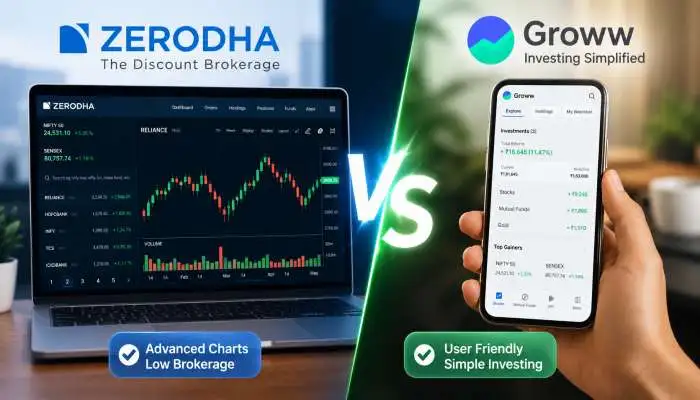
I opened a brokerage account in an application in my phone. It took ten minutes. Then, I established a program to invest a small amount of cash every single month which will be automatic. This is referred to as dollar-cost averaging.
I do not attempt to determine the best time to make a purchase (the time is impossible!), I simply purchase a small amount on a set frequency. In high prices, fewer shares are purchased using my money. At low prices, my money will purchase a larger number of shares. Over time, it all averages out . It makes it totally stress and emotive free. I just set it and forget it.
The "Set It and Forget It" Habit That Keeps Me on Track
After my automatic investments were in process, I believed that I was free. However, a healthy portfolio should have a minor check-up every now and then.
Rebalancing My Basket of Eggs
In the long run, certain of my investments increased more rapidly than others. Perhaps my U.S. stock ETF was having a fantastic year and increased by 60 per cent of my portfolio to 70. This implies that I was taking a risk that I was unintentionally taking!
Hence, I have an annual activity, which is termed rebalancing. All I do is sell a little of the winners (the stocks which have increased a lot) and with the money I buy a little more of the losers (the bonds or gold which did not increase as much). This puts my portfolio back to my initial 60/30/10 plan. It makes me buy low and sell high, that is just what you want to do .
My Annual "Tune-Up"
I do not check my investments on a daily basis. That would drive me crazy! I review my portfolio on one occasion per year typically during my birthday. I ask myself:
- Am I on track in my asset allocation?
- Have my goals changed? (Am I considering to purchase a house shortly?)
- Am I okay with this amount of risk?
This end of year review assists me to keep it straight and not being agitated by the noise of the day to day market.
The Beginner Traps I Managed to Avoid
I nearly did some of my old errors, and I do not wish you to do them, as well!
The "I Can Pick Winners" Trap
I considered investing in an electric car company of new hot stock that I love. However, it was my friend who reminded me of the story of Enron. Enron was a massive corporation that no one ever imagined it could be anything bad, and one day it was worth nothing. Those who put all their eggs in that basket lost it all. The frightening experience with the scary story made me remain with my broad ETFs.
The "More is More" Trap
I also believed that I had to have 20 different ETFs in order to be diversified. However, I came to understand that you do not get an additional protection when you hold several ETFs tracking the same thing (such as having two different funds tracking the S and P 500 Index). It just makes things messy . Simplicity is key.
The "I Should Have Started Yesterday" Trap
Yesterday was the best time to have begun. The second best time is today. Wait no longer till you have enough money. Start with $5, $10, or $20. All one has to do is to start developing the habit.
Conclusion: You've Got This!
I have learned to create a diversified portfolio myself and this is one of the best things that I have ever done to my peace of mind. It ceased to be frightening, and it became thrilling. I no longer just leave my money there, I am putting it into action.
It was once said by a legendary economist Harry Markowitz that, Diversification is the only free lunch in investing. And he was right. It is the easiest method of dealing with risk and at the same time, your money has a chance to increase.
So, take a deep breath. Open that application. Install that auto-transfer. Start with what you have. Your future being will be so glad you did.
FAQs: I Had as a Beginner
The following are some of the questions I would type in Google at late hours. I would hope you will be helped by the answers.
How can the diversified portfolio be constructed using the simplest methods?
The most painless alternative is through a target-date fund. You choose one fund and depend on the time you want to retire (such as 2060). That single fund is a diversified combination of stocks and bonds on autopilot to you and it gets more conservative as you age. It is really a set it and forget it solution.
What is the number of stocks or funds that I should have?
You do not have to have dozens of different stocks. All you need is 3 to 4 well-selected ETFs and be extremely diversified. As an illustration, a single stock ETF in the United States, a single fund that trades in global stocks and a single bond ETF provide you with exposure to thousands of companies across the globe.
Is it too late to start investing if I'm over 40?
Absolutely not! It is never too late. While your strategy might be a little different (you might lean towards more bonds for stability), starting at 40 is much better than starting at 50 or 60. Time in the market is your friend, no matter your age.
Should I invest a big pile of cash all at once or a little at a time?
Both are fine! If you have a big lump sum, many studies show it's usually better to invest it all at once. But if that makes you nervous (like it did for me), dollar-cost averaging—investing a little bit each month—is a fantastic way to ease into the market and build a consistent habit .
Can I lose all my money in a diversified portfolio?
It is highly, highly unlikely you would lose all your money in a properly diversified portfolio. Why? Because you own tiny pieces of thousands of different companies all over the world. For you to lose everything, the entire global economy would have to collapse.
 in India.webp)