I used to think that building wealth meant following the crowd. Buy what everyone else is buying. Invest in the same companies your neighbor talks about at backyard barbecues. But after a decade of watching markets go up and down, I've learned something important: the crowd is usually wrong. When everyone is rushing toward the same door, that door often slams shut.
That's why I want to share a different perspective on High-Growth Assets to Watch This Year. Not the obvious picks that every financial news channel is screaming about. I'm talking about the quiet opportunities. The ones hiding in plain sight. The assets that real experts not just TV personalities are quietly building positions in while everyone else is distracted.
Let me walk you through what I've discovered after countless hours of research, conversations with portfolio managers, and yes, some expensive lessons learned the hard way.
Why I Stopped Listening to the Noise?
The error that I committed a few years ago makes me cringe. I had invested in a high-technology stock alleging that everybody mentioned it was the next hit. It was already doubling and I jumped in believing that I was not late. In half a year, I had lost 40 percent of my money.
That experience made me reconsider the high-growth assets that I should watch this year-or any year. I came to realize that when investment is being featured on the headline, then easy money has been made. The opportunity actually exists in not looking where other people are not looking.
On this day, I would like to discuss five absolutely different categories, in my opinion, with the real growth potential in 2026. These are not the sorts of recommendations you would give. However, there are times the lesser of the evils is the way to go.
Water Infrastructure: The Most Overlooked Resource
Last month I was talking to a friend who is in municipal finance. In her coffee, she said something that chilled me. Do you know how many American cities have water pipes that are laid under the administration of Grover Cleveland? she asked. I didn't. "More than you'd think," she said. And they are all not doing well at once.
You may also read :- Beginner-Friendly Investment Strategies That Actually Work
Why Nobody Talks About Water as a Growth Asset?
The point about water is the following: we become accustomed to it when it becomes unexpectedly dry. But down below there is a crisis in progress. According to the American Society of Civil Engineers, our drinking water infrastructure has a C-grade. Not only humiliating, that is not cheap.
It has been estimated that the water infrastructure investment gap in United States is more than 80 billion every year. Someone has to fill that gap. And that somebody is building one of the most sustainable long-term wealth building opportunities that I have ever witnessed.
The Companies Actually Solving Water Problems
I do not mean purchasing the bottled water companies. I am researching such businesses that most investors have never heard about:
- Pipe repair experts who will be able to repair the damaged pipes without excavation of the whole neighborhood.
- Manufacturers of Smart meters who assist the cities in noticing the leaks before they turn out to be disasters.
- Firms that manufacture filtration systems whose products eliminate emerging pollutants such as PFAS (so-called forever chemicals in the news).
A firm that I have been following- we may refer to them as AquaTech Solutions (not their actual name) has come up with a sensor system that anticipates the failure of pipes before they are broken. Their revenue grew 34% last year. They are not being discussed by anyone in the financial television. However, the cities that purchase their products are not leaving.
The Demographic Trend Driving This Market
The following number is important: in 2030, 78 million of the American baby boomers, will be older than 65. The elderly need better water purification and health care systems which are reliant on clean water. In the meantime, the city of Sun Belts are being strained by the generation who are heading towards the cities with a number half of what the system was built to support.
This is not a condition that changes the quarter after. This is a decade-long infrastructure reconstruction which is only beginning.
Distressed Real Estate in Unexpected Places
When I mention real estate most people imagine the purchase of a house and wish that it would appreciate in value. That is not what I am talking about. I am referring to commercial properties that all other people have abandoned.
The Office Space Opportunity Everyone Misses
You know about the news, office is dying. Remote work killed them. However, last month I was out with a commercial real estate broker, who was showing me a Class B office building located in one of the mid-sized cities of the Midwest. The building was 60% empty. The owner was desperate.
What the majority lacks here is the fact that the building is located at a region which was zoned to be mixed in use. The bones are solid. The place, two blocks away a new transit station, is all of a sudden attractive. And the price? Forty percent lower than it exchanged in 2019.
How Conversion Plays Create Value?
It is not the smart money that is buying offices to make them offices. They are purchasing them to convert them. Commercial real estate conversion projects towers include buildings being converted into:
- Apartments (we have a shortage of housing everywhere)
- Healthcare (medical office space is expanding)
- Last-mile distribution centers (e-commerce isn't slowing down)
A developer that I follow has redeveloped failed office parks in suburbs into elderly housing communities. This is supported everywhere by the demographics. He has been averaging 18 per cent returns per annum in the last five years.
The Secondary Market Sweet Spot
I do not mean that you should go out and purchase an office building yourself. However, there are distressed commercial conversion real estate investment trusts (REITs) which are specifically targeted. These are not the REITs that your broker has recommended. They are smaller, more specialised and with discounts on trade since institutional investors cannot be bothered about properties less than 50 million.
One of these REITs specializes in the conversion of old retail space, that is, dead malls, into industries. Their occupancy rate is 97%. It has increased their dividend in the last seven consecutive years. No one is talking about them because mall REIT is a losing bet. However, they are not betting on malls. They are gambling on the ground they are on.
Niche Financial Products You've Never Heard Of
I will confess that I used to sleep reading about financial products. They appeared to be complex and dull. Thereafter, I encountered a man in a conference who represents professional athletes in terms of money. One of the things that he explained changed my mindset.
Litigation Finance: Betting on Justice
What is a crazy idea, you can invest in the lawsuits of other people. Not in her own right, but as a financier. This is what litigation financing does.
There are cases when law firms that have good cases can exhaust funds before a trial. They may borrow on their future settlements -at good rates to the lender. The case itself secures these loans. In the event of a loss in the case, the money has to be paid by the law firm. If it wins, everyone profits.
How This Market Works?
The numbers are surprising. The average returns of litigation finance have been at 15-20 percent per year and have not been interrelated with other movements in the stock market. The cases are varied in the industries and jurisdictions. The most serious risk, which is that courts will cease to exist, has not yet become a reality in the developed world.
One of the funds that I have studied is dedicated to business-related conflicts between established businesses. Almost all of these cases are settled. It takes an average of 18 months. The loss percentage is below 5%.
Why Individual Investors Can Participate Now
This used to be an institutional game until recently. The required minimum investments were $5 million or above. However, new vehicles have created investment opportunities in the form of accredited investors that have a minimum of significantly lower amounts.
It is not something I would say every one can do. It is complex and involves actual threats. However, litigation finance pays off in a non-S&P 500 direction, at least when it comes to a relatively trivial share of a diversified portfolio. That is worth having in any market scenario.
The Circular Economy Revolution
My daughter has recently questioned me on why we are throwing away so much. It appeared to be a mere question. The more I contemplated on it the more I realized it was very deep.
Waste as a Resource
The conventional economy is unitarial: take, make, use, and discard. This is not the case with the circular economy: take, make, use, recover, remake. Each ton of material we recover is also a ton we do not need to mine, drill, or even import.
This opens huge prospects where most investors are unconcerned.
Chemical Recycling for Plastics
Plastic recycling is broken. Most plastic "recycling" actually means downcycling into lower-quality products that eventually become waste anyway.
Chemical recycling breaks plastics down to their molecular level, creating virgin-quality materials from old containers. The technology exists. The economics are improving. And major consumer brands are desperate for solutions—they've promised to use recycled content but can't find enough supply.
How I'm Thinking About Risk With These Assets
Being absolutely frank, all the assets I have outlined possess actual dangers. The government contracts on water infrastructure are subject to delays. Bad property needs time and money. In the context of industrial automation, there is competition with international giants. The business of litigation funding is complex. Technology requires scale in its work by companies of the circular economy.
My Personal Approach to Position Sizing
I do not put all my eggs in one of these baskets. The formula is easy: every single, genuinely different idea of investment, I will put no more than 5 percent of my total portfolio in it. In that case, in case I am not correct, as I have been on many occasions, I have the harm contained.
When any of these ideas becomes a success, then growth will turn 5 percent into 10 percent or 15 percent. If it fails, I lose 5% and move on. This method enables me to get rest at night and at the same time enjoy asymmetric returns opportunities.
The Power of Being Early
The greatest threat about these ideas is prematureness. The water infrastructure has been on the verge of happening decades ago. Since there were no electric vehicles, battery recycling has been the next big thing.
However, this is what is different now; the catalysts are real. Water pipes are literally breaking. Volumes of batteries are literally coming true. Labor shortages are in reality permanent. It is patience to wait until one can be just in time and not appear too early.
Practical Steps for Getting Started
In case any of these concepts capture your attention, this is how I would go about learning more.
Start With Education, Not Action
Know the industry before you drop a dime into it. Read trade publications. Follow the executives at LinkedIn. Identify investor presentations in space by public companies. Above all, interview industry workers, they will tell you things which no annual report will ever tell you.
Find the Public Companies First
Publicly traded stocks are the least complicated method of gaining exposure. Although ultimately, you might be interested in a private investment, the dynamics in the industry will be learnt by public companies in the same industry. They will also expose you to liquid as you conduct research.
Consider ETFs as Training Wheels
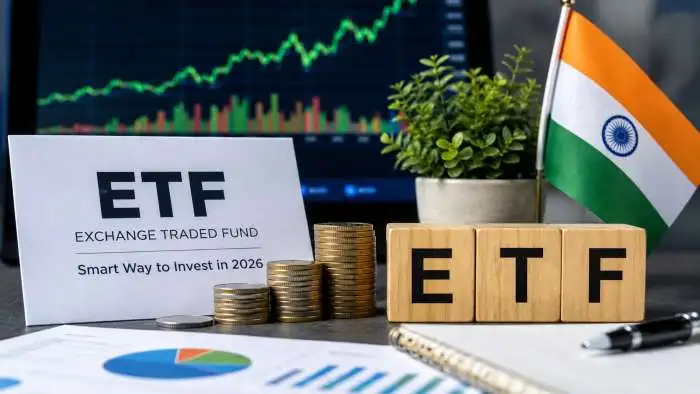
Some specific ETFs are now available on a number of these groups. There are various ETFs in water infrastructure. Automation and robotics have been bundled. ETFs in the form of circular economy are becoming common. These will not expose you to the exact niches that I have mentioned, but it is a fairly decent place to begin.
What the Experts Are Saying
I contacted a few of the professionals who give thoughts on such markets day in day out. Their views supported my thought process.
Marcus Webb, Infrastructure Investment Analyst:
The most misconceived class of infrastructure asset is water. It is assumed by people to be controlled utilities with limited returns. They overlook the fact that there are private business firms that offer technology and services to such utilities. That's where the growth is."
Elena Rodriguez, Commercial Real Estate Specialist:
The office market is not dying it is differentiating. Amenities Class A space is performing well. Class B and C space is dying. But even dead space is good when you can dream of how to use it. The winners will be those who will be able to do conversion and not the landlords who wish that leasing recuperates.
My Final Thoughts on Building Wealth Differently
I started this piece by talking about my mistake with the hot tech stock. That lesson cost me money, but it taught me something more valuable: real wealth isn't built by chasing what's popular. It's built by understanding something deeply that others haven't yet noticed.
The High-Growth Assets to Watch This Year I've described share one common thread: they're all responding to genuine, structural changes in how our world works. Water pipes are old. Buildings need new purposes. Workers are scarce. Justice requires funding. Waste has value. These aren't trends that fade when the news cycle changes.
Frequently Asked Questions
Q: Aren't these investments too complicated for regular people?
A: Some are, yes. But many are accessible through ETFs, mutual funds, or publicly traded stocks. Start there. Learn as you go. Complexity isn't a reason to avoid something—it's a reason to approach it carefully.
Q: What's the biggest risk with these alternative assets?
A: Illiquidity. Many of these investments can't be sold quickly at a fair price. Make sure you have adequate liquid savings before committing money to anything you can't exit tomorrow.
Q: How much of my portfolio should be in these kinds of ideas?
A: I personally limit concentrated positions in any single theme to 5%. For all alternative ideas combined, I try to stay under 25% of total net worth. The rest stays in broad market index funds that I know will perform reasonably over time.
Q: Do I need to be an accredited investor for any of these?
A: Some opportunities—like litigation finance funds or private real estate deals—do require accredited status. But the public market options I've mentioned are available to everyone with a brokerage account.
Q: How do I know when to sell?
A: I sell when the thesis changes, not when the price moves. If water infrastructure is growing because pipes are failing, that trend continues regardless of quarterly price fluctuations. If the trend reverses—if new materials eliminate the need for pipe replacement—then I reconsider.
 in India.webp)