I remember the first time I ever tried to bake a cake. I was about ten years old, and I wanted it done in five minutes. I cranked the oven up as high as it would go, thinking I was a genius. Spoiler alert: I ended up with a charcoal brick that could have been used as a doorstop.
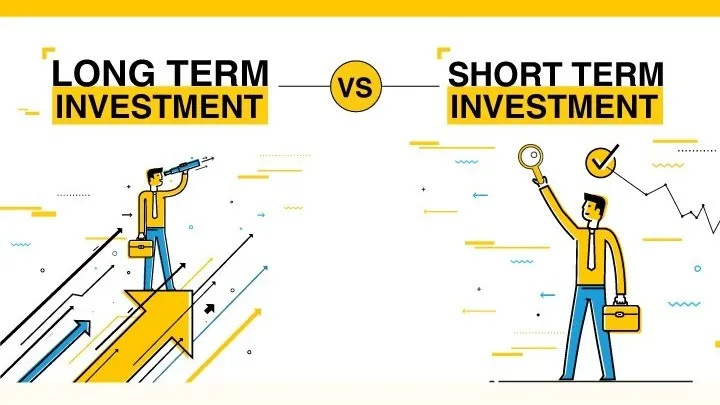
Investing can feel a lot like that cake story. We all want results, and we want them now. But when we dig into the world of Long-Term vs Short-Term Investing, we realize that the magic isn't in the heat; it’s in the time you let the batter bake.
I’ve been on both sides of this fence, making the mistakes and learning the hard lessons so you don’t have to. Today, I want to walk you through this crucial debate and help you figure out the best recipe for your own financial future.
What Does "Short-Term Investment" Really Mean?
Speaking of short-term investing, we are most likely referring to the period of three years or less. It is possible to think about the things, such as a down payment on a vehicle, a wedding next summer, or that vacation to Disney World. The cash must be available, and it must be available in the near future.
You are on a time schedule here and therefore, the most important thing you will do is to safeguard your money. You can not risk it on a precarious stock that is likely to run into a crash when you have to pay that honeymoon suite. My short term savings are in places I find not exciting.
And you know what? I like to be boring in terms of money I cannot afford to lose. We are speaking of high yield savings accounts, money market accounts or short-term government bonds. These choices are such as an umbrella during a rain. They may not be fancy, however, they have the benefit of keeping you dry.
The greatest risk in this case is not not to get enormous profits, but volatility. Suppose the stock market were a large amiable dog. Most of the time, it’s calm. However, at times it will catch a squirrel and run after it in a mad takeoff zigzag. And when you have to snatch that dog in the middle of one of them squirrel chases, you will not do it.
When you require your money at the time market is on the losing end, you must sell at a loss. That is not one of the risks which I am not ready to take regarding my short-term objectives.
You may also read :- Smart Investing Moves to Make When Markets Turn Volatile
The Superpower of Long-Term Investing
Now we will speak about the other side of the coin. My best subject is long-term investing since this is where the magic of wealth building works. We are discussing the time horizons of ten years or more. It is your pension, or possibly your college education that your child won’t even get after ten years.
The true secret ingredient to this is what was first reportedly referred to by Albert Einstein as the eighth wonder of the world: compound interest. Imagine it is a snowball that is falling down a long and snowy slope. It starts small. But as it rolls it gathers on more snow.
And thereupon that snow brings up more snow. It becomes larger and larger, becoming quicker and stronger. Your money works the same way. You make returns on your initial cash, then you make returns on your returns. In a few more than twenty or thirty years that small snowball might have grown into a fortune.
| Strategy | Time Horizon | Primary Goal | Typical Investments | Risk Level |
|---|---|---|---|---|
| Short-Term | Less than 3 years | Capital Preservation (Safety) | High-yield savings, Money market, CDs | Low |
| Long-Term | 10+ years | Wealth Growth | Stocks, ETFs, Mutual funds | Higher |
Why Your Timeline is Your Superpower?
The one thing that determines the way to invest is your schedule. It’s like a see-saw. On one side, you have risk. You have time on the other side. You have time and can cope with a lot of risk, since you have the room to breathe in the event that the market plunges.
When the market crashes during the second year of a thirty year life, you simply wait. You don’t sell in a panic. You may even purchase more when the prices are low.
But when you have a short time to do it, then that see-saw goes the contrary. You cannot afford to gamble much since you simply have no time to wait till you recover. It might lead to the collapse of the market, and you would have to sell your stocks at the most inappropriate time since you will need the cash as a house deposit the next month.
Depending on your time horizon, your risk tolerance, or the degree to which you can bear risk emotionally and financially, is in direct proportion.
The Hidden Trap: Opportunity Cost
At times, it is even more expensive to go by the old rules. I recently read an excellent article by David Belle one of the traders at Fink Money who discussed what he termed as opportunity cost. He indicated that following a rule that says you cannot break the five-year minimum rule of investing can cause you to miss some of the incredible short-term opportunities.
This does not imply that you should give up a long term plan. It implies that you are to be flexible. Mr. Belle recommends that you maintain a chunk of shorter-term options due to the fact that you have some dry powder as a reserve to jump on great ideas.
Perhaps you invested 70% of your income in longer-term, set-it and forget it investments, and also have 30% in more flexible short-term accounts this way you can make it any day and time the right moment. I like this middle ground, as it provides one with the best of both worlds.
My Strategy: Building a "Ladder" for Life
So, how do we actually do this? I prefer to consider my money as having various buckets or rungs on a ladder with each having a different purpose.
The Bottom Rung: The Safety Bucket
This is my short-term money. It is regarding things which I know will be in the coming year or two. A new roof on the house, family vacation or my emergency kitty in case I lose my job. This cash is stored in a savings account with high interest. It is secure, it is liquid (so I can get it at any moment), it brings some interest. It is not very exciting, but at night I am able to get some sleep.
The Middle Rung: The Growth & Protection Bucket
This is medium term objectives, which may be three to seven years. I am perhaps saving to buy an even bigger house or start a business. Here, I can take a bit more risk. I may invest in a combination of the items such as a balanced mutual fund that contains stocks and bonds.
This provides me with certain room to develop, but the ties assist to even out the journey in case the stock market becomes rocky. It is a means to an end of achieving greater returns without jeopardizing my goal altogether.
The Top Rung: The Wealth-Builder Bucket
This is my long-term investment, mostly retirement which is many years to come. This bucket is nearly fully allocated in ETFs of diversified stock markets. I purchase them, and I attempt to leave them outside of my thoughts. I do not panic in a case of a scary news.
I do not look at the price on a daily basis. I simply left that snowball roll down the hill adding more and more snow with the passing years. It is a matter of diversifying, having a small share in thousands of companies in different corners of the world so that when one company or nation has a bad year, it will not make my entire portfolio to sink.
Staying Sane on the Rollercoaster
Being honest: regardless of the greatest scheme, investing is a roller coaster. That is when the market plunges 20 percent and every piece of news is all doom and gloom, your brain will scream at you to SELL! SAVE YOURSELF!" This is the very last thing to do. Panic selling transforms a loss into a permanent loss.
The best way to remain calm is not to forget your timeline. As a long term investor, a crash in the market is merely a sale. It is as though your favorite store has been giving everything a 20 percent discount. You would not flee, you would do shopping!
When you continue to invest in the market when things are not doing well. You will purchase more shares at a low price. Once the market finally goes back (and it has always gone back), then you will be in a much better position.
To keep my long-term bucket on track, I keep a very simple plan and do not allow my emotions to dominate. I have a plan, and I stick to it.
Conclusion: Finding Your Perfect Balance
And thus, what is better between long-term and short-term investing? As you have already guessed, you need both. They are not opposing; they are team players. Short-term investment provides stability and safety of your short-term objectives. The benefit of long-term investing is that you receive growth and the phenomenal ability of compounding in the future you have been dreaming of.
Begin by setting your own objectives. What are you saving for? When do you need the money? Be honest about your answers. Then, build your own ladder. Keep your short-term money in places of safety, your medium-term money in a balanced combination and leave your long-term money free to play in the stock market.
Frequently Asked Questions
What is the biggest distinction between long-term and short-term investing?
The only distinction is the time frame and your ultimate objective. Short term investment falls under the category of money you require within a period of less than three years and having that money safe is the primary interest. The long-term investment is where you will not need the money in the next decade or more and it is your aim to use it to increase at a high rate.
What is the number of years that is classified as long term in investing?
The majority of specialists suppose that the long-term is ten years or more. This allows your investments time to notice any downtrends in the market, and also, enjoy the strength of compound interest.
Am I going to make a loss in short-term institutions?
Yes, you can, the risk is significantly less than with stocks. In case you place your short-term funds in a government bond or high-yield savings account, then your money is quite safe. On the other hand, when you invest the short-run finance in stock market there is a great possibility that you may lose a huge amount of it once the market crashes just before you are supposed to withdraw.
What are the most desirable investments to start with?
To novices, I will always recommend low cost index funds or ETFs (Exchange-traded Funds) in long-term objectives. They act as a basket containing numerous stocks and thus, you are diversified at once. A savings account with a high yield is an awesome and easy starting point in case of short term objectives.
Should I check my investments on a daily basis?
Most likely not, in the long-run. Daily checking will give you anxiety and incline towards making a poor decision due to a false drop. It is far more healthy to be able to visit them once every couple of months or even once a year to ensure that you are still on course towards achieving what you wanted to achieve.
 in India.webp)