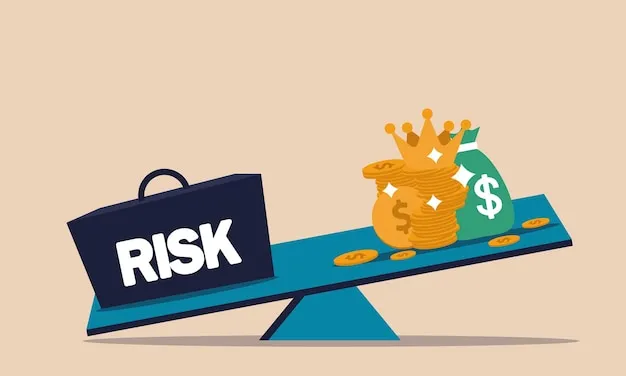
You are actually considering a decision between Safe vs High-Risk Investments when you consider where to size your money. A secure investment is a well built boat in a peaceful lake; it will not rock over, but will not be very quick. Pursuing a high-risk investment is more of a speed boat in the sea; it can move extremely fast, however the ripples may cause the ride to be bumpy or even knock you out.
During my academic years on the issue of money working. I have learnt that one should not choose only one side. I have witnessed people lose everything due to being too greedy and I have also witnessed people lose out due to being too afraid to do anything new. Since I have been around these waters.
I would be able to demonstrate to you how you can combine the two to achieve your objectives. The gimmick is that you must know what you are entering into, before you plunge in.
Understanding Safe vs High-Risk Investments
It is all about the balance between Safe vs High-Risk Investments battle. Safe investment implies that you have nearly no doubt that you will receive the money you invested back, with a slight increase. Imagine that it was a library book- you just have to know when it is due and what you are going to get out of that particular book. Conversely, a high-risk option implies that you may get a lot of money, yet you may lose all the money.
The majority of the population employs diversified portfolios in order to remain insured. This implies that they invest a part of the money in safe areas and part in risky areas. In so doing, in case there is a failure in the risky part, there is the safe part that would absorb them. It is the reserve parachute!
You may also read :- How to Build a Diversified Investment Portfolio?
What Makes an Investment "Safe"?
Discussing Safe vs High-Risk Investments, the idea of the former is typically associated with such safe investments as government-insured bonds or high-interest savings accounts. The government protects these. When there is an issue with the bank, the government is there to refund you (up to some limit).
Safety investments are ideal when used in short-term financial purposes. You will not want to keep your money in a location where the price is likely to fall in case you need money to buy a car in the next year. You desire a guaranteed return so that you can be certain about the amount that you will have when it comes to a time to purchase.
The Allure of High-Risk Opportunities
Why would any one choose the risky side in Safe vs High-Risk Investments? The solution is not complicated: high potential returns. Risky assets such as personal stocks, cryptocurrencies, or venture capital may increase by a large percentage compared to a bank account.
Their options however are highly volatile. This is a large term which simply translates to an increase and decrease of price at very fast rates. One day you can be rich, the next day can be concerned. It is the reason why they are commonly referred to as long-term growth strategies. You must be able to wait several years before the ocean subsides.
Comparing Safe vs High-Risk Investments Side-by-Side
As a way of helping you decide, we would look at the comparison of these two. According to the majority of experts, your age and your purpose should be the ones that help you select the one.
The Benefits of Staying Secure
However, in the field of Safe vs High-Risk Investments, the safe one concerns preservation of capital. It is an exotic way of saying retaining what one possesses.
- Low Volatility: The figures are not fluctuating.
- Regular Payments: You are sure when you will receive payments.
- Peace of Mind: You do not need to wake up in the morning and check the news whether you lost your money or not.
The Power of Taking Risks
The dangerous aspect is on wealth accumulation. To become a millionaire of your $100, you will need to make some risks.
- Beating Inflation: Safe accounts: The growth of these types of accounts is usually lower than the growth of toys and food. More aggressive investments keep your money pace with the increase in prices.
- Compounding Growth: Even little risks can yield enormous rewards over a period of 10 or 20 years.
Smart Ways to Manage Safe vs High-Risk Investments
You do not even need to be a professional to handle Safe vs High-Risk Investments in a professional manner. These are the three secrets that can make your money revolve and you sleep well.
1. Know Your Risk Tolerance
Risk tolerance is simply an amount of bumpy weather that you can put. When you start crying when you see your account drop by 10 dollars then you are not a high risk taker. When you are able to shrug it off and wait it until it returns up, then you have a high risk tolerance.
2. Use the "Bucket" Method
I would always recommend dividing the money into three buckets:
- The Safe Bucket: It contains things that you would require in a short time.
- The Growth Bucket: What you desire and in 5-10 years.
- The Dream Bucket: This saves very long-term plans such as retirement.
3. Diversify Your Assets
The most important tool is asset allocation. Never put your eggs in one basket! You need to diversify even in risky investment. Buy other kinds of stocks or consider index funds that contain hundreds of companies simultaneously.
Expert Opinions on Risk and Safety
The wisest individuals in the world must make a decision between Safe vs High-Risk Investments. The following is the message that they have to say regarding taking a right step in 2026.
Quote by Experts: Not knowing what you are doing is the source of risk. When you realise what you are investing in the risk will not be so big. It is not worth investing in something when you cannot describe it to a 10-year-old. This is the reason I believe we need to focus more effort on portfolio diversification going forward.
Expert Opinion: "With the prices continuously rising, the greatest risk is one that does not take risk. As long as your money does nothing, it becomes worthless with time. The reason is that the majority of research studies primarily aim to highlight the problem's issue and concentrate on its potential remedies.
Common Mistakes to Avoid
Many beginners commit the same mistakes when making the decision of Safe vs High-Risk Investments. Here is how to avoid them:
- Escape the Trap of Chase: Do not make any purchases because it increased the day before yesterday. It is not the best moment to purchase!
- Failure to pay attention to Fees: Certain safe accounts involve charging such fees that you actually lose money. Always look at the small print of options that are free of charge.
- Emotional Investing: Do Not Panic and sell your stocks. Keep to your scheme, and remain composed.
Finding Your Perfect Balance
Ultimately, it is up to you whether you select Safe vs High-Risk Investments. Everyone cannot be answered with a perfect answer. The most appropriate strategy is one that allows you to achieve your objectives and at the same time be happy and safe.
Begin with a good base of good money. When you are prepared enough in case of emergencies, then you can begin to venture into the wonderful world of growth. With patience and cunning, you can make something out of yourself out of your little saving. Continue to ask questions, continue to learn, and have in mind that gradual and constant improvement is the most effective in winning the money game!
Do you want me to draw you a plain table to make you decide how much to put in each of the buckets according to your age?
Frequently Asked Questions
What is the safest investment I can buy? U.S. Treasury Bonds or FDIC-insured savings accounts are the safest. The government supports these, and thus your money is highly secured.
Is it possible to have a secure investment that makes a loss? Typically no, but when the inflation is high, your money will not purchase a lot. This implies that 100 dollars may only be used to purchase only 95 dollars worth of groceries the following year.
To what extent is my money to be in high-risk spots? A common rule is the "Rule of 100." Subtract your age from 100. That is the percentage you may invest in the stock market. You may have much to grow in case you are 10! Being 90, you should be safe.
Cryptocurrency is a risky investment? Yes, it is deemed that it is very high-risk. The prices may vary up to 20 percent within an hour. You should only invest the money which you are comfortable to lose.
What is a mutual fund? A mutual fund is a large group of money of a large number of people that is employed to purchase numerous stocks. It is one of the medium risks that can be taken rather than a high risk.

 in India.webp)