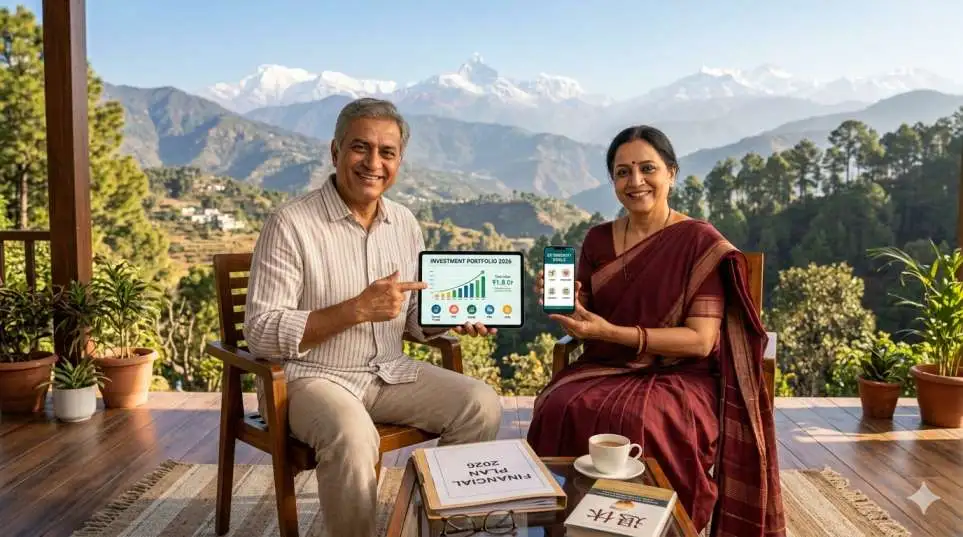
When someone says the word "retirement", most of us just think about the day we stop going to work. But that is not the main point. The main point is this: after you stop working, do you have enough money to live properly? In India, this question matters a lot.
Because we do not have a strong government system that gives you money after retirement like some other countries have. Your job stops paying you the day you retire. Your shop or business also stops giving you income once you close it. That means nobody sends you a salary after a certain age. So you have to learn how to save for retirement in India starting from today.
A lot of people only begin to think about retirement when they are 40 or 50 years old. That is late, but still okay. The very best time to start saving was ten years back. The second best time is right now, today.
In this article, I will tell you step by step how to save for your retirement, which are the best retirement plans in India, and what amount of money you truly need. I will not use any tough or fancy words. I will keep everything easy, real, and useful for a common Indian person.
What is Retirement Planning? A Simple Meaning
What is retirement planning? Let me tell you in very simple words. You first decide how much money you will need every month after you stop working. Then you take a small part of your current earnings and put it into places that grow that money over time. These places can be a post office scheme, a bank plan, or a government fund. When you finally stop working, you take that grown money out.
Retirement planning is not only for rich people. Anybody can do it. A vegetable seller can save for retirement. A school teacher can save. A person who runs a small shop can save. You do not need a big salary. You only need two things. One is a clear plan. Two is discipline to follow that plan every month. If you do not plan, you may have to ask your children for money or take a loan after retirement.
You may also read :- How to Choose the Right Budgeting Method
Smart Steps to Build Your Retirement Fund in India

Step 1: How Much Money is Needed for Retirement in India
Before you save, you must know your target. So, how much money is needed for retirement in India? This depends on your current monthly spending. A good rule is: you need at least 80% of your current monthly income every month after retirement.
For example, if you spend 30,000 rupees per month today, you may need around 24,000 to 25,000 rupees per month after retirement. But remember, prices go up every year. This is called inflation. In India, inflation is around 6% on average. So if you retire after 20 years, 25,000 rupees will feel like only 8,000 rupees today.
To be safe, most financial experts say you need a retirement corpus of at least 1.5 to 2 crore rupees if you live in a city and retire at 60. If you live in a small town, 80 lakh to 1 crore may be enough. But the exact number depends on your lifestyle. Use a how to save for retirement calculator online to get a close number. Many banks and mutual fund websites have this tool for free.
Step 2: Start Early Even with Small Amounts
The biggest mistake people make is waiting. They say "I will start next year" or "I am only 30, I have time". But time is your best friend in saving. If you start at 25 years old and save 5,000 rupees per month, by 60 you can have more than 2 crore rupees (with 12% returns). If you start at 40, you will need to save 20,000 per month for the same result.
So do not wait for a big salary. Start how to save for retirement with whatever you have. Even 500 rupees per month is better than zero.
Step 3: Pick the Right Places to Put Your Money
This is where many people get confused. They do not know the best retirement investment options India offers. Let me list the simplest and safest ones. No jargon. No hard names.
- Employees' Provident Fund (EPF) : If you work in a company, this is automatic. You and your company put 12% of your salary each. This money grows safely and gives you a lump sum at retirement.
- Public Provident Fund (PPF) : This is for everyone. You can open it in any post office or bank. You put money every year for 15 years. The government gives you interest. No risk at all. Best for very safe saving.
- National Pension System (NPS) : This is made only for retirement. You put money every month. When you retire, you get a part as lump sum and the rest as monthly pension. Good for long term.
- Mutual Funds (especially Index Funds or Large Cap Funds) : These are slightly more risky but give better returns. If you are under 45, put some money here. Do not pick complicated funds. Pick a simple "Index Fund" that follows the stock market.
- Senior Citizens Savings Scheme (SCSS) : This is for people above 60. But if you are near retirement, you can plan to put money here after retirement. It gives fixed income every quarter.
For a middle class person, the best retirement investment options for middle class in India are PPF, NPS, and a simple mutual fund SIP. Do not touch options like real estate or gold unless you fully understand them.
Step 4: How to Save for Retirement Calculator Every Year

A how to save for retirement calculator is not a scary tool. It is just a simple way to check if you are on track. You enter your age, current savings, monthly saving amount, and expected return. The calculator shows you how much money you will have at retirement.
Use this calculator once every year. If you see a shortfall, increase your monthly saving by 5-10%. This small habit saves you from big shocks later.
Saving for Retirement in Your 50s: Best Strategies
Many people come to me and say "I am 52 years old. I have nothing saved. What do I do?" This is hard but not impossible. The best way to save for retirement in your 50s is different from the way in your 30s. You have less time, so you cannot take big risks. But you also need growth.
Here is what you do if you are in your 50s:
- Increase your saving rate to at least 30-40% of your income. Cut all unnecessary expenses. No new car. No expensive phone. Every rupee goes to retirement.
- Put most of your money in safe places like PPF, Senior Citizens Scheme, and bank fixed deposits. Do not put more than 20% in mutual funds.
- Plan to work 2-3 years more if possible. Working until 63 or 64 gives you more saving years and fewer retirement years to fund.
- Do not put money in long term plans like NPS with lock-in. You need access to money soon. Choose plans where you can withdraw after 5-7 years.
- Clear all loans before retirement. Home loan, car loan, personal loan – all must be zero. Loan EMIs eat your retirement money very fast.
Even if you start at 55, you can still build a small corpus of 30-40 lakh rupees by 65. That may not be luxury, but it can cover basic food, medicine, and house expenses. Do not lose hope.
Best Retirement Options in India Based on Your Lifestyle

Let me list the best retirement plans in India based on your type. Choose what fits you.
| Your Type | Best Plan |
|---|---|
| Government employee | NPS + EPF + PPF |
| Private company employee | EPF + PPF + Index Mutual Fund |
| Business person or self employed | PPF + NPS + Fixed Deposit |
| Housewife with small saving | PPF (minimum 500 rupees per year) + Gold Savings Scheme |
| Person near retirement (50+) | SCSS + Bank FD + Monthly Income Plan |
| Young person (20-30 years) | Index Mutual Fund + PPF + NPS |
Do not take insurance plans as retirement plans. Plans like LIC Jeevan Anand or ULIPs are not good for retirement. They give low returns and high charges. Keep insurance and investment separate.
Retirement Savings Tips India: Small Habits That Work
Here are some retirement savings tips India that actually work in real life. These are not theory. These are used by common people who retired peacefully.
- Start a separate bank account only for retirement. Every month on salary day, transfer your saving amount to this account. Do not touch it.
- Every time you get a salary increase, save half of that increase. If your salary goes up by 10,000 rupees, put 5,000 rupees into retirement. Your lifestyle stays same, but your savings grow.
- Use bonus and festival money for retirement. Got a Diwali bonus of 20,000? Put 15,000 into PPF. Enjoy 5,000. This balance works.
- Do not tell relatives or friends about your retirement fund. They will ask for loans. Politely say no. Your retirement is your responsibility.
- Keep a simple written plan on paper. Write down: "I will save X rupees per month in PPF, Y rupees in mutual fund, and Z rupees in NPS." Review this paper every 6 months.
- Teach one family member about your retirement plan. If something happens to you, that person should know where your money is. Keep all statements in one file.
Retirement Savings in India Explained with a Practical Example

Let me give you a real example so you understand how much to save for retirement India in actual numbers. Take Ramesh. He is 35 years old. He lives in Pune. His monthly income is 50,000 rupees. He wants to retire at 60. His monthly expense today is 35,000 rupees. He expects inflation at 6%. He expects his retirement savings to grow at 10% per year.
For Ramesh to have a monthly income of 85,000 rupees at retirement (which is equal to 35,000 rupees of today after inflation), he needs a total retirement corpus of around 1.8 crore rupees.
To reach 1.8 crore by age 60, Ramesh needs to save 8,500 rupees per month from today. He puts 4,000 in PPF, 3,000 in NPS, and 1,500 in an index mutual fund. He increases this amount by 5% every year. He uses a how to save for retirement calculator every year to check.
If Ramesh starts at 35, he reaches his goal easily. If he waits until 45, he would need to save 22,000 rupees per month. That is very hard on a 50,000 salary.
Final Words
Saving for retirement is not complicated. It is also not something to fear. It is simply a habit of putting a small part of your today’s income for your tomorrow’s needs. In India, we have many good options. From the safety of PPF to the growth of mutual funds. From the government backed NPS to simple bank fixed deposits.
You do not need to be a finance expert. You do not need to read big books. You just need to start. Open a PPF account this week. Set a monthly auto debit of 1,000 rupees. Download a how to save for retirement calculator app. Tell yourself: "I am saving for my peaceful old age."
Frequently Asked Questions (FAQ)
1. What is the best way to start saving for retirement in India if I have no savings at age 40?
The best way to save for retirement in your 50s also works for age 40. You still have 20 years left. Open a PPF account today. Start a monthly SIP of at least 3,000 to 5,000 rupees in a large cap mutual fund. Put another 2,000 rupees in NPS. Increase your saving amount by 10% every year. Do not take loans. Clear any existing debt fast. By age 60, you can still build a good fund of 80 lakh to 1 crore rupees.
2. How much money is needed for retirement in India for a middle class family living in a small city?
For a middle class family in a small city like Indore, Lucknow, or Coimbatore, you need around 80 lakh to 1 crore rupees if you retire at 60. This amount gives you a monthly income of about 40,000 to 50,000 rupees after retirement. That is enough for house bills, food, medicines, and some small travel.
3. Which are the best retirement investment options for middle class in India that are completely safe?
The safest best retirement investment options for middle class in India are PPF, EPF, and Senior Citizens Savings Scheme. These are government backed. Your money never goes down. The interest is fixed and guaranteed. PPF gives around 7-8% return. SCSS gives around 8.2% for senior citizens. If you want a little more return with very low risk, add a bank fixed deposit.
4. Can I use a how to save for retirement calculator for free? Where do I find one?
Yes, you can find a how to save for retirement calculator for free on many websites. SBI, HDFC, ICICI, and mutual fund companies like SBI Mutual Fund and HDFC Mutual Fund have this tool on their sites.
5. What is the minimum monthly amount needed to start saving for retirement in India?
You can start saving for retirement in India with just 500 rupees per month. Open a PPF account at the post office. The minimum deposit is 500 rupees for one full year. That means less than 42 rupees per month. If you can do 1,000 rupees per month, put 500 in PPF and 500 in a small cap or index mutual fund SIP. The amount is small, but the habit is big. Over 30 years, even 500 rupees per month grows to a good amount.

 in India.webp)