Money stresses me out. I bet it stresses you too sometimes. You look at your bank account and wonder where all your cash went. You tell yourself next month will be different. But then next month comes, and the same thing happens again. I have been there. Most people have.
The problem is not that you cannot save money. The problem is you have not found the right way to track your money yet. Everyone's brain works differently. Everyone's money situation looks different. So why would one single budgeting method work for everyone?
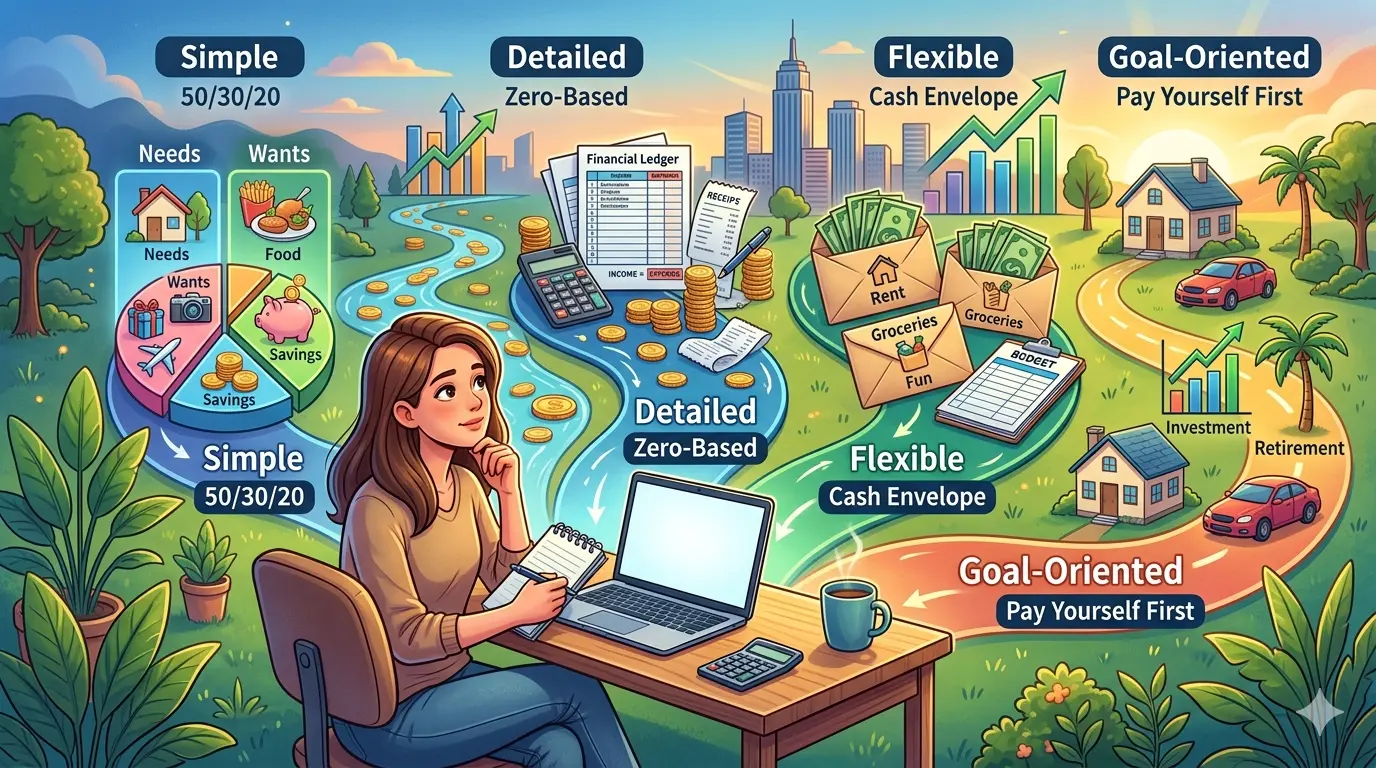
Let me help you figure out how to choose the right budgeting method for your life. Not some perfect made-up life. Your real life with your real problems and your real goals.
Why Most People Give Up on Budgeting
Before we talk about different ways to budget, let us be honest about why budgets fail. Most people start a budget feeling excited. They write down every single thing they spend. They cut out coffee and eating out and fun things. And then two weeks later, they give up.
Why? Because that budget did not fit who they are. Some people love details. Some people hate them. Some people need to see cash in their hands. Some people never carry cash at all. Some people get paid the same day every month. Some people never know what next week will bring. You need a budget that fits you. Not the other way around.
You may also read :- The 50/30/20 Rule: A Simple Saving Strategy
The 50/30/20 Budgeting Rule Explained with Examples in India
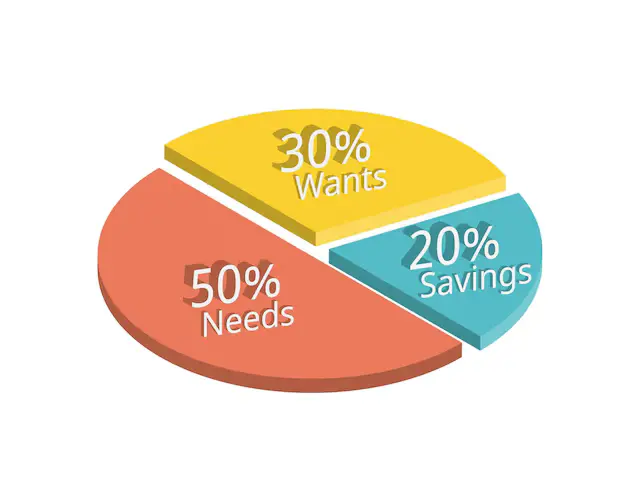
Let me start with the easiest method first. The 50/30/20 rule is simple. You do not need to track every tiny expense. You just need to look at three big buckets.
Here is how it works. You take your money after taxes. You split it three ways.
- 50 percent goes to needs - This is rent, food, power bill, water bill, insurance, basic transport
- 30 percent goes to wants - This is eating out, Netflix, new clothes, trips, hobbies
- 20 percent goes to savings and paying off debt - This is emergency fund, retirement, credit card bills, loan payments
The 50/30/20 run the show is a basic way to oversee your cash. You part your month to month wage after charges into three parts. Fifty percent goes to your needs. These are lease, basic need bills, school expenses for kids, power, and petrol for your bicycle or bike. Thirty percent goes to your needs. This incorporates eating out at a nearby eatery, motion picture tickets, or a modern phone case. The final twenty percent goes to reserve funds and paying off obligations like a advance or credit card bill.
Let me provide you an India case. If you bring domestic ₹30,000 a month, you put ₹15,000 towards needs like lease and nourishment. You keep ₹9,000 for needs like a end of the week trip or requesting biryani. You spare or utilize ₹6,000 to pay down obligation. This strategy works well for salaried individuals in cities like Mumbai or Delhi. It gives you flexibility without following each little cost. Fair take after the three buckets, and you remain on track.
Zero-Based Budgeting Method Explained Step by Step
This method is for people who want full control. Every single dollar has a job. You do not leave any money sitting around without a purpose. Here is how you do it step by step.
Step one - Write down your monthly income
Add up every dollar you bring home. Include your regular job, side work, child support, everything.
Step two - List every single expense
Write down rent, power, water, gas, food, phone, internet, insurance, debt payments, subscriptions, eating out, clothes, gifts, car repairs, everything.
Step three - Give every dollar a job
Subtract your expenses from your income. The answer should be zero. If you have money left over, give it a job like savings or extra debt payment. If you are short, cut something out.
Step four - Track every single purchase
Write down what you spend every day. Check if you are staying on track.
Step five - Adjust as you go
If you spend too much on food, take money from your eating out bucket. Keep everything adding up to zero.
This method works really well for people who like details and control. But it takes work. You need to track things every day or every week. I know a single mom who uses this method. She gets paid every two weeks. She sits down on payday and plans where every dollar goes.
She told me it changed her life because she stopped wondering where her money went. But if you hate writing things down, this method will make you miserable. Try something else.
Envelope Budgeting Method Pros and Cons
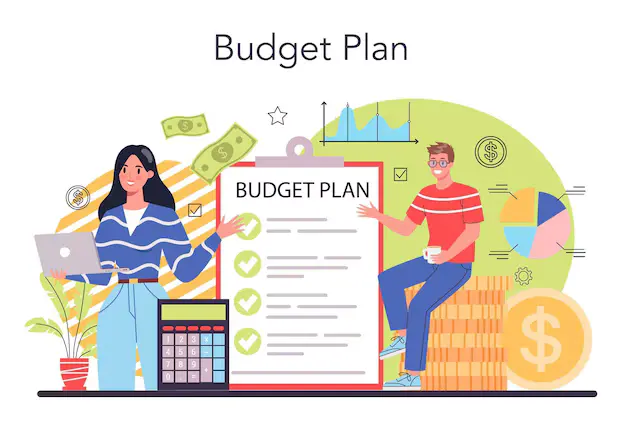
This is the cash method. Old school but very effective for some people. Here is how it works. You get paid. You take out cash for your spending categories. You put the cash into envelopes. You write the category on each envelope like Food, Gas, Eating Out, Clothes. When the envelope is empty, you stop spending in that category.
Let me give you the envelope budgeting method pros and cons so you can decide if it fits you.
The good parts
- You feel the money leaving your hands. This hurts more than swiping a card
- You cannot overspend. When the envelope is empty, it is empty
- No surprise charges at the end of the month
- Great for people who overspend on things like food or fun money
The bad parts
- You cannot use this for online bills like rent or power
- Carrying a lot of cash feels unsafe to some people
- You miss out on credit card rewards
- Hard to track where your money went last week if you do not write it down
- Does not work well if you live far from your bank
This method works best for people who spend too much with cards. If you are a visual person who needs to see the money leaving, try envelopes.
Budgeting Methods for Saving Money Fast
What if your main goal is to save as much as possible as quickly as possible? You need a different approach. The fastest way to save money is not about tracking everything. It is about making the money leave your account before you can spend it. Here are three budgeting methods for saving money fast that actually work.
The pay yourself first method
Set up an automatic transfer on payday. Send money straight to savings before you pay anything else. Start with 10 percent. Then try 15 percent. Then 20 percent. Live on what is left. You will find a way to make it work.
The one month challenge
Pick one month to spend as little as possible. No eating out. No new clothes. No subscriptions. No fun spending. Put every extra dollar into savings. You will be shocked how much you save in just 30 days.
The no spend weekend method
Every weekend, spend zero dollars. Eat food from your fridge. Do free things at home or at the park. Save your weekend money for an entire year. You will build a real emergency fund faster than you think.
These methods work because they focus on action, not tracking. You do not need a perfect budget. You just need to stop spending and start saving.
Best Budgeting Method for Irregular Income
If you are a freelancer, a gig worker, a server, or anyone who does not get the same paycheck every time, regular budgets do not work for you. You cannot plan 50 percent for needs when you do not know how much money is coming.
Here is the best budgeting method for irregular income that actually works.
Step one - Find your lowest month
Look back at your income for the last year. Find the smallest month. Build your budget around that number.
Step two - Cover your basics first
Pay your rent, power, water, food, and transport before anything else. These are your non-negotiable needs.
Step three - Build a buffer
When you have a good month, do not spend the extra money. Save it. Put it in a buffer account. When you have a bad month, pay yourself from the buffer.
Step four - Pay yourself a set amount
Decide how much you need each month for your needs and a little for wants. Pay yourself that amount from your income each month. Put the rest in your buffer account. On bad months, pull from the buffer to pay yourself the same amount.
This method works because it smooths out your ups and downs. You stop worrying about lean months because you planned for them.
I talked to a rideshare driver who uses this method. He puts 30 percent of everything he makes into a buffer account. On slow weeks, he pays himself from the buffer. He told me he sleeps better now because he knows the money is there.
Digital Budgeting Methods vs Traditional Budgeting
We live in a different world now. Our parents used paper ledgers and cash envelopes. We have apps that track every swipe automatically.
So which is better? Let me break down digital budgeting methods vs traditional budgeting.
Digital methods
- Apps connect to your bank and credit cards
- They sort your spending into categories for you
- You can check your budget anywhere on your phone
- Most cost money for the good features
- Some people worry about giving apps access to their bank account
-
Easy to ignore because you do not have to do the work
Traditional methods
- Paper and pen or a simple notebook
- Cash envelopes or a spreadsheet
- You have to write everything down yourself
- Almost free to do
- No privacy concerns
- Harder to ignore because you do the work yourself
Here is a simple table to help you decide.
| Feature | Digital | Traditional |
|---|---|---|
| Cost | Often monthly fee | Nearly free |
| Time needed | Low after setup | Medium to high |
| Awareness level | Low (automatic) | High (manual) |
| Best for | Busy people | Detail people |
| Privacy risk | Some | None |
I use a mix of both. I have an app that tracks my card spending automatically. But I still use a cash envelope for my food budget. Do what works for you.
How to Choose the Right Budgeting Method for Your Life
Now you know the main methods. How do you pick one? Ask yourself these questions.
Do you like details or big picture?
If you love spreadsheets and numbers, zero-based budgeting will make you happy. If numbers make your head hurt, try the envelope method or the pay yourself first method.
How does your income come in?
Regular paycheck every two weeks? Most methods work. Different amount every time? Use the irregular income method.
What is your main money problem?
If you spend too much on little things, use cash envelopes. If you forget to save, use pay yourself first. If you have no idea where your money goes, try zero-based for one month to find out.
Are you high tech or low tech?
Love your phone and apps? Go digital. Hate looking at screens? Use paper and cash.
Here is the most important thing I can tell you. You do not have to pick one method forever. Try something for one month. If it does not feel right, try something else next month.
The best budget is the one you will actually use.
Budgeting Methods for Low Income Families
Let me speak directly to families who do not have much room to move. When every dollar already has a job, budgeting feels like torture. I get it.
Here are budgeting methods for low income families that do not require cutting out things you cannot cut.
The needs first method
List your needs in order of importance. Rent first. Then power and water. Then basic food. Then transport to work. Pay these first before anything else. If there is nothing left for wants, that is okay. You kept a roof over your head.
The small bucket method
Pick just one category to track and control. Maybe it is food. Maybe it is fun money. Maybe it is subscriptions. Do not try to track everything. Just fix one leak at a time.
The cash only for problem spots
If eating out kills your budget, use cash for food. Take out what you can afford. When it is gone, it is gone. You eat from home.
The swap method
Instead of cutting things out, swap them for cheaper versions. Trade cable for a cheap streaming service. Trade name brand food for store brand. Trade driving for bus when you can.
They use the needs first method. The mom told me they stopped feeling guilty about not saving money. They focus on keeping their needs covered and finding small wins where they can.
Do not compare your budget to someone who makes more money. Compare your budget to your own goals.
FAQ About Budgeting Methods
How long should I try a budgeting method before giving up?
Try any method for at least three months. The first month is just learning. The second month gets easier. By the third month, you will know if it fits your life. Do not quit after one week because it feels hard.
Can I use two different budgeting methods at the same time?
Yes, many people mix methods. Use the 50/30/20 rule for your big picture. Use cash envelopes for your problem categories like food or fun money. Use digital apps to track everything automatically. Take what works from each method.
What budgeting method works best for paying off debt?
The zero-based budgeting method works best for debt payoff. Every extra dollar gets assigned to debt. You cannot accidentally spend money that already has a job. Pair this with the debt snowball or debt avalanche method for faster results..
What is the best budgeting method for a family with kids?
The envelope method for variable costs like food, clothes, and activities works well for families. Use digital autopay for fixed costs like rent and power. Teach older kids to track their own spending envelopes too.
How do I start budgeting when I live paycheck to paycheck?
Start with the needs first method. List your absolute needs. Pay those first. Then look at what is left. Even ₹500 a week saved adds up over time. Do not try to save 20 percent when you cannot. Save what you can and grow from there.
Final Thoughts
You have read a lot here. Take a breath. You do not need to be perfect at budgeting today. You just need to start somewhere. Pick one method from this article. Try it for one month. If it works, keep going. If it does not, pick a different one next month.
The real secret about how to choose the right budgeting method is simple. The right method is the one that makes you feel less stressed about money, not more stressed. The right method helps you sleep at night. The right method gives you hope that your situation can get better.
You can do this. Start today. Pick one method. Give it a real try.
 in India.webp)