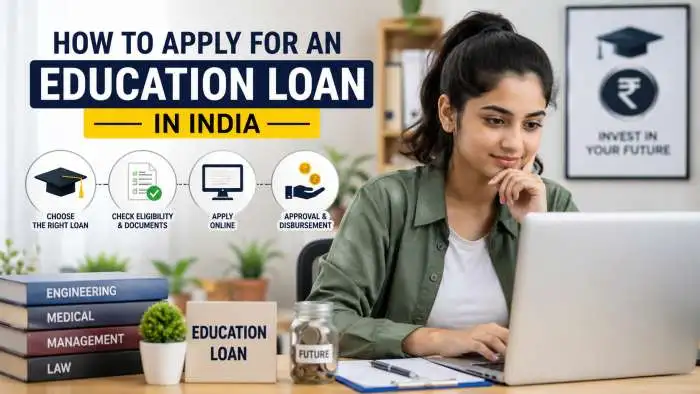
Applying for student loans in India is straightforward when you know the steps. Start by checking your eligibility, gather documents like admission letters and ID proof, then apply online through bank portals or the Vidyalakshmi portal. Government schemes like the Central Sector Interest Subsidy Scheme help reduce costs. For SBI student loans, the process takes about 7-15 working days. This guide walks you through every step, from choosing the right loan to getting the money in your bank account.
Your Dream Education Deserves Smart Funding
Every year, millions of Indian students dream of higher education but worry about costs. The good news? Student loans make these dreams possible. Whether you want to study engineering, medicine, or business, banks and government schemes stand ready to help.
How to apply for student loans in India starts with understanding your options. Public banks like SBI offer affordable interest rates. Private banks provide quick approvals. Government portals simplify the entire loan application process. The key lies in knowing which path fits your needs best.
This guide shares real experiences from students who successfully secured education loans. You will learn practical tips that save time and money. Let us begin your journey toward funded education.
You may also read :- RBI Education Loan Guidelines: Rules, Collateral and Moratorium
Understanding Student Loans in India

What Are Education Loans?
Education loans are special financial products designed for students. Banks give you money to pay for tuition, hostel fees, books, and other study costs. You repay this amount after completing your education and finding a job.
Most Indian banks offer loans up to ₹10 lakhs without collateral. For amounts above ₹10 lakhs, you might need property or fixed deposits as security. Interest rates range from 7% to 12% depending on the bank and your profile.
Why Choose a Student Loan?
Student loans offer several advantages over other funding sources. You build a credit history that helps future financial needs. The interest rates remain lower than personal loans. Many loans include a moratorium period, meaning you start repaying only after getting a job.
Government schemes further sweeten the deal. The Central Sector Interest Subsidy Scheme covers interest during the study period for economically weaker students. Tax benefits under Section 80E allow deduction on interest paid.
How to Apply for Student Loans in India: Step-by-Step Process?
Step 1: Check Your Eligibility
Before starting how to apply for student loans in India, verify your eligibility. Most banks require:
- Indian citizenship
- Admission to a recognized institution
- Age between 18-35 years
- Good academic record
- Co-applicant with stable income (usually parents)
Some banks offer loans without co-applicants for professional courses. Check specific requirements on bank websites.
Step 2: Calculate Your Loan Amount
Determine exactly how much money you need. Include:
- Tuition fees for the entire course
- Hostel or rent charges
- Book and equipment costs
- Living expenses
- Travel and miscellaneous costs
Banks typically finance 90-100% of total expenses. Government banks often cover full costs, while private banks may ask for margin money (your contribution).
Step 3: Choose the Right Bank or Portal
India offers multiple loan sources:
- Public Banks: SBI, Bank of Baroda, PNB (low interest rates)
- Private Banks: HDFC, ICICI, Axis (quick processing)
- Government Portals: Vidyalakshmi portal (single application for multiple banks)
- NBFCs: Avanse, Credila (flexible terms)
Each option has pros and cons. Public banks offer lower rates but slower processing. Private banks process faster but charge higher rates.
How to Apply for Student Loans SBI: A Popular Choice?
SBI Student Loan Scheme Overview
State Bank of India offers the most popular education loan scheme. SBI provides loans up to ₹1.5 crores for domestic studies and ₹2 crores for abroad studies. Interest rates start from 8.15% for loans above ₹7.5 lakhs.
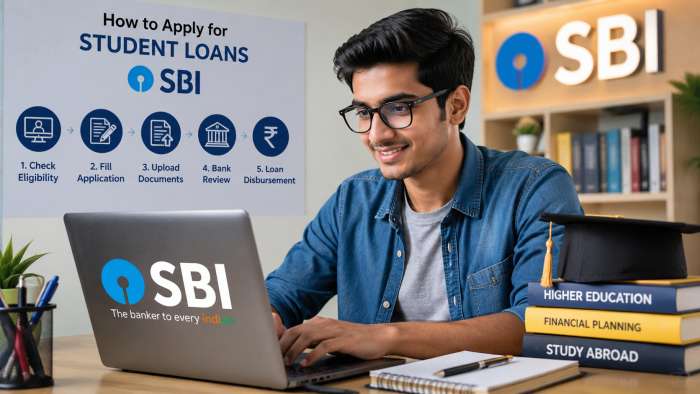
How to apply for student loans SBI involves both online and offline methods. The bank offers a dedicated portal for education loan applications called SBI Scholar Loan.
Step-by-Step SBI Application Process
- Visit the SBI official website
- Navigate to the education loan section
- Click on "Apply Now" for Scholar Loan
- Fill in personal and academic details
- Upload required documents
- Pay the processing fee (if applicable)
- Schedule a branch visit for verification
- Await approval (typically 7-10 working days)
SBI offers doorstep service for loan applications. Bank representatives visit your home for document collection and verification.
Required Documents for SBI Loan
SBI asks for these documents:
- Admission letter from recognized institution
- Academic mark sheets (10th, 12th, graduation)
- Identity proof (Aadhaar, PAN, Voter ID)
- Address proof (Passport, Utility bills)
- Income proof of co-applicant (Salary slips, ITR)
- Fee structure from college
- Bank statements of co-applicant
How to Apply Education Loan in Vidyalakshmi Portal?
What Is the Vidyalakshmi Portal?
The Vidyalakshmi portal is a government initiative for education loans. This online application platform connects students with multiple banks through a single form. You can apply to up to three banks simultaneously.
How to apply education loan in Vidyalakshmi portal saves time and effort. The portal integrates with major banks including SBI, Bank of Baroda, and Canara Bank.
Step-by-Step Vidyalakshmi Application
- Visit vidyalakshmi.co.in
- Register with your mobile number and email
- Complete the online application form
- Select preferred banks (up to 3)
- Upload scanned documents
- Submit the application
- Track application status online
- Banks contact you for further processing
The portal provides a unique loan ID for tracking. You can check the status of your loan application process anytime.
Benefits of Using Vidyalakshmi Portal
- Single form for multiple bank applications
- Real-time application tracking
- Government-backed authenticity
- No need to visit different banks
- Standardized document requirements
- Faster processing through digital integration
How to Apply for Student Loans Online: Digital Options?
Online Application Through Bank Websites
Most banks now offer complete online application processes. You can apply from home without visiting branches. How to apply for student loans online typically involves:
- Visiting the bank's education loan page
- Filling the digital application form
- Uploading self-attested documents
- Completing e-KYC verification
- Signing digital agreements
- Receiving approval online
Mobile Banking Applications
Leading banks offer education loan applications through mobile apps. SBI YONO, HDFC Bank Mobile App, and ICICI iMobile allow loan applications in minutes. These apps also provide loan calculators to estimate EMIs.
Document Upload and Verification
Digital applications require clear document scans. Keep high-resolution images ready. Most banks accept documents in PDF or JPG format. Ensure all documents are self-attested.
Education Loan by Government: Schemes You Should Know
Central Sector Interest Subsidy Scheme (CSIS)
The government offers interest subsidies for economically weaker students. Under CSIS, the government pays interest during the moratorium period. This education loan by government benefit applies to loans up to ₹7.5 lakhs.
Eligibility criteria include:
- Family income below ₹8 lakhs per year
- Admission to recognized institutions
- Course duration of minimum 6 months
Padho Pardesh Scheme
This scheme supports minority students studying abroad. The government provides interest subsidies during the study period. Eligibility requires:
- Minority community (Muslim, Sikh, Christian, etc.)
- Admission to foreign universities
- Family income below ₹6 lakhs
State Government Schemes
Many state governments offer additional subsidies. Maharashtra, Gujarat, Tamil Nadu, and Karnataka have special education loan schemes. Check your state government's education department website for details.
Documents Required for Student Loan Application
Essential Documents Checklist
Gather these documents before starting how to apply for student loans in India:
Academic Documents:
- Admission letter from college/university
- Fee structure details
- Previous academic mark sheets
- Entrance exam scorecards
Identity and Address Proof:
- Aadhaar card (mandatory)
- PAN card (for loans above ₹2 lakhs)
- Voter ID or Passport
- Driving license (optional)
Income and Financial Documents:
- ITR of co-applicant (last 2 years)
- Salary slips (last 3 months)
- Bank statements (last 6 months)
- Property documents (for secured loans)
Common Document Mistakes to Avoid
Many applicants face delays due to document issues. Common mistakes include:
- Submitting expired identity proofs
- Missing self-attestation
- Low-quality document scans
- Incomplete admission letters
- Missing fee structure details
Double-check all documents before submission. Keep originals ready for verification.
The Loan Application Process: What to Expect
Application Submission
The loan application process begins with form filling. Provide accurate information matching your documents. Inconsistencies lead to rejections or delays.
Bank Verification
Banks verify submitted documents thoroughly. They may contact your college to confirm admission. Some banks conduct home visits for verification.
Credit Assessment
Banks assess your repayment capacity through:
- Co-applicant income analysis
- Course future prospects
- College reputation
- Academic performance
Approval and Sanction
After verification, banks issue a sanction letter. This document states:
- Approved loan amount
- Interest rate
- Repayment terms
- Security requirements
Sign the loan agreement and complete other formalities.
Disbursement of Funds
Banks disburse the loan amount directly to your college. They pay fees semester-wise or annually. Living expenses come to your bank account.
Government Education Loan Schemes: Detailed Overview
Dr. Ambedkar Central Sector Scheme
This scheme supports students belonging to scheduled castes. The government provides interest subsidies for loans up to ₹10 lakhs. Benefits include:
- 100% interest subsidy during study
- No processing fees
- Simplified documentation
National Scholarship Portal Integration
Many education loans connect with the National Scholarship Portal. Students can apply for scholarships alongside loans. This combination reduces overall education costs.
Tax Benefits on Education Loans
Section 80E of Income Tax Act provides deductions on interest paid. You can claim this benefit for up to 8 years. The deduction applies to loans for higher education (any stream).
Tips for a Successful Loan Application
Start Early
Begin your application 3-4 months before admission. This buffer handles unexpected delays. Early start also allows comparison shopping across banks.
Maintain a Good Credit Score
A good CIBIL score increases approval chances. Co-applicants with high credit scores get better interest rates. Check your credit report before applying.
Choose the Right Moratorium Period
Most banks offer moratorium periods equal to course duration plus 6 months. Some banks offer extended moratoriums for professional courses. Choose a period that gives comfortable time for job search.
Negotiate Interest Rates
Don't accept the first offer. Compare rates across banks. Good academic records and strong co-applicant profiles help negotiate better rates.
Keep Extra Documents Ready
Bank may ask for additional documents during processing. Keep these ready:
- Birth certificate
- Community certificate (for government schemes)
- Marriage certificate (for married applicants)
- Property valuation report
Common Mistakes to Avoid
Ignoring Government Schemes
Many students miss out on government benefits. Always check available schemes before applying. These subsidies save significant money.
Underestimating Total Costs
Don't just consider tuition fees. Include all expenses in your loan amount. Underestimation leads to fund shortages mid-course.
Choosing Wrong Co-applicant
Co-applicant income affects loan approval and amount. Choose parents or guardians with stable income. Multiple co-applicants can increase loan eligibility.
Missing Deadline for Subsidy Applications
Government schemes have specific deadlines. Missing these means losing subsidy benefits. Mark all important dates clearly.
Student Loan Repayment: What You Need to Know
Understanding the Moratorium Period
During your course, you don't need to pay EMIs. The moratorium period covers your full course duration plus 6-12 months. Simple interest accrues during this period.
EMI Calculation and Planning
Use online EMI calculators to plan repayment. Consider:
- Loan amount
- Interest rate
- Repayment tenure (usually 5-15 years)
Prepayment Options
Most banks allow prepayment without penalties. Paying early reduces total interest. Start repaying during the moratorium period if possible.
Default Consequences
Defaulting on loans damages credit scores. Banks may take legal action. Communicate with your bank if facing repayment difficulties.
Real Student Experiences: What We Learned
Rahul's Story: SBI Scholar Loan Success
Rahul from Mumbai applied how to apply for student loans SBI through the Scholar Loan scheme. "The online process took just 20 minutes," he shares. "Documents were verified in 3 days, and I received the sanction letter within a week."
Priya's Experience with Vidyalakshmi Portal
Priya used the Vidyalakshmi portal to apply how to apply education loan in Vidyalakshmi portal. "The single form for multiple banks saved so much time," she explains. "I got offers from three banks and chose the best interest rate."
Expert Opinion: Financial Advisor's Take
Mr. Sharma, a leading financial advisor, emphasizes: "Understanding how to apply for student loans in India properly can save families lakhs in interest. Government schemes are underutilized. Students should explore all options before finalizing."
Conclusion: Your Path to Funded Education
Understanding how to apply for student loans in India opens doors to quality education without financial stress. The process has become simpler with online applications and government portals. Whether you choose SBI, other banks, or the Vidyalakshmi portal, the key lies in preparation.
Start your application early. Gather documents carefully. Explore all government schemes. Compare offers from multiple banks. With proper planning, securing an education loan becomes straightforward.
Remember, student loans are investments in your future. Every rupee spent on education creates returns through better career opportunities. Take this step confidently, knowing you have all the information needed.
The journey from application to disbursement involves clear steps. Follow our guide, avoid common mistakes, and you will soon have the funds for your dream education. India's education loan system supports students like you. Now, go ahead and apply with confidence.
Frequently Asked Questions
Q1: What is the maximum loan amount for education loans in India?
The maximum amount depends on the bank and course. SBI offers up to ₹1.5 crores for domestic studies and ₹2 crores for abroad studies. Most banks provide up to ₹10 lakhs without collateral.
Q2: How long does the student loan application process take?
The loan application process typically takes 7-15 working days. Online applications through portals like Vidyalakshmi may process faster. Government schemes might take additional time for approval.
Q3: Can I apply for student loans without a co-applicant?
Most banks require a co-applicant with stable income. Some banks allow loans without co-applicants for specific professional courses. However, such loans have stricter eligibility criteria and higher interest rates.
Q4: What are the interest rates on education loans in India?
Interest rates range from 7% to 12%. Public banks offer lower rates (7-9%), while private banks charge higher rates (9-12%). Government schemes may offer interest subsidies reducing effective rates.
Q5: Can I get a loan for studying abroad through Indian banks?
Yes, Indian banks offer loans for foreign education. SBI, Bank of Baroda, and ICICI Bank provide loans for over 200 countries. The loan amount can go up to ₹2 crores for top universities.