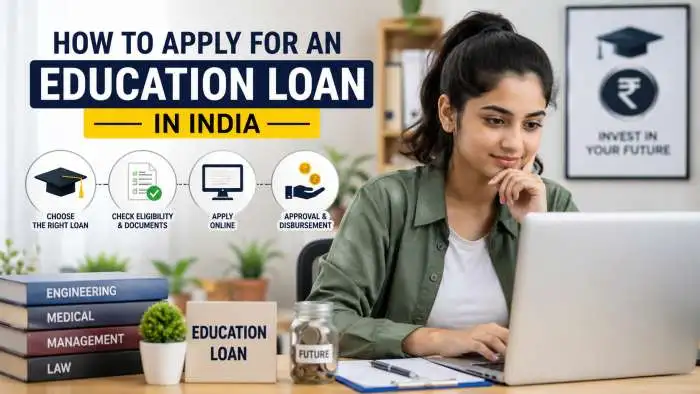
Dreaming of studying at a top university in the USA, UK, or Canada is exciting. It is a big decision. But paying for it can feel tough. That is where an education loan for study abroad comes in. A good loan helps you pay for your education, living costs, and travel. For many Indian students, this loan is the key that opens the door to a world-class education. This guide will walk you through everything you need to know. We will cover the loan process step-by-step, helping you turn your study abroad dream into reality .
What is an Education Loan for Study Abroad?
An education loan for study abroad is a special type of loan. It is for Indian students who want to study in a foreign country. The loan covers many things. It covers tuition fees, the cost of books, living expenses, and travel costs .
Think of it as a partner in your journey. It helps you pay for your education now. Then, you repay the loan after you finish your studies and get a job.
How Does a Study Abroad Loan Work?

The process is simple. You apply to a bank or a Non-Banking Financial Company (NBFC). They will check your application and the documents you provide. Then, they will approve a loan amount based on your course and future career prospects. You and your co-applicant then accept the terms. The bank then sends the money directly to your university. This ensures your tuition is paid on time . After your course ends, you start the repayment process.
You may also read :- How to Repay Student Loans in India Fast: Best Strategies
Key Eligibility Criteria for Your Abroad Education Loan
Before you apply, you need to check if you meet the education loan for abroad studies eligibility. While rules can differ between lenders, here are the common requirements .
Who Can Apply?
- Nationality: You must be an Indian citizen .
- Academic Profile: You must have a strong academic record. Your past grades matter .
- Admission: You must have secured admission to a recognized university or college abroad. The admission letter is a must .
- Co-Applicant: Most lenders require a co-applicant. This is usually a parent, spouse, or guardian. They will be responsible for the loan if you cannot repay it .
What Determines Your Loan Eligibility?
Lenders look at several factors to decide your eligibility .
- University Reputation: Top universities are seen as a good investment. Lenders are more likely to approve your loan .
- Course: You must be applying for a full-time degree or diploma course .
- Career Prospects: Lenders want to see that you will get a good job after graduation. This ensures you can repay the loan .
The Real Cost: Education Loan for Study Abroad Interest Rate
One of the most important things to check is the education loan for study abroad interest rate. This rate determines how much you will pay back in total. Interest rates can range from 8% to 14% per year, depending on the lender and your profile . It is wise to compare these rates before deciding on a lender.
What Affects Your Interest Rate?
- Secured vs. Unsecured Loans: A loan with collateral (like property or fixed deposits) usually has a lower interest rate. An unsecured loan, without collateral, generally has a higher rate .
- Lender Type: Nationalized banks like the State Bank of India (SBI) often offer lower interest rates compared to private banks or NBFCs .
- Your Profile: Your academic profile and the reputation of your university can influence the final interest rate offered to you .
Documents Required for Your Study Abroad Loan
Keeping your paperwork ready is the key to a fast loan approval. Here is a checklist of the education loan for abroad studies documents required .
Documents for the Student
- Identity and Address Proof: This includes your Aadhar Card, PAN Card, and a valid Passport .
- Academic Records: You need your mark sheets from 10th and 12th grade. You will also need your graduation mark sheets. Be sure to include scores from entrance exams like GRE, GMAT, or IELTS .
- Admission Letter: A copy of your admission offer letter is essential. The bank needs to know the details of your course and university .
- Expense Details: Provide a detailed schedule of your study expenses. This is the "statement of cost" that your university provides .
Documents for the Co-Applicant
- Identity and Address Proof: Similar to the student, the co-applicant needs to provide their KYC documents .
- Income Proof: The co-applicant must provide proof of income. For salaried individuals, this can be salary slips and Form 16. For those who are self-employed, it will be Income Tax Returns and bank statements .
- Financial Statements: A bank statement for the last six months is usually required .
SBI Education Loan for Study Abroad: A Trusted Option

The SBI education loan for study abroad is a very popular choice for Indian students. SBI is a trusted government bank. They offer a specific scheme for international studies called the "SBI Global Ed-Vantage" .
Why Choose SBI?
- High Loan Amount: You can get a loan for up to 1.5 crore rupees. This is a significant amount that can cover most study expenses abroad .
- Competitive Interest Rates: SBI is known for having some of the lowest interest rates in the market .
- No Collateral for Premier Institutes: For students who get into top foreign universities, SBI offers loans up to 50 lakh rupees without collateral . This is a huge advantage for many students.
No Collateral Loans: A Dream Come True?
Many students worry about arranging property for collateral. Several lenders now offer education loans without collateral. This is great news for middle-class families .
How Do These Loans Work?
- Based on Potential: Instead of property, these lenders look at your future potential. They assess your academic background and the reputation of your university .
- SBI Global Ed-Vantage: Under this scheme, SBI offers collateral-free loans up to ₹50 lakh for students admitted to premier foreign institutions .
- Private Lenders: Companies like MPOWER Financing are also known for offering loans without requiring a cosigner or collateral. They focus on your merit and earning potential . It is important to note that this type of loan may come with a slightly higher interest rate.
Step-by-Step Guide: How to Apply for Your Loan
Start Your Research Early
It's important to get started on this process early. First, research different banks and NBFCs. Compare their interest rates, terms, and conditions. This will help you find the best deal for your education loan .
Prepare Your Application
Gather all the required documents. Make sure every form is filled out correctly. Have your co-applicant ready to sign. You should also have a clear plan about how you will repay the loan after your studies .
Loan Sanction and Disbursement
The bank will review your application. It may take a few days for the process. Once the loan is approved, the money is sent directly to your university. This happens in installments, as per your academic calendar .
Essential Tips to Boost Your Approval Chances
Lenders are becoming stricter with loan approvals. Here are some tips to make your application stronger .
- Choose Recognized Institutions: Getting admission to a well-known university helps a lot .
- Strong Co-Applicant: Having a co-applicant with a stable income is a big plus.
- Good Credit History: A good credit score for the co-applicant strengthens the application .
- Complete Documentation: Submit a clean and complete set of documents. This prevents delays .
- No Outstanding Loans: Ensure you or your co-applicant do not have a large amount of outstanding loans with other banks .
Conclusion
Getting an education loan for study abroad is a big step. It is a financial investment in your future. With the right knowledge and preparation, you can easily navigate this process. Start by researching your options. Understand the eligibility criteria and interest rates. Gather all your documents. Remember to be patient and thorough. Your dream university is within reach. The best plan is to begin your loan application early so that you can beat the deadline .
Frequently Asked Questions
1. What is the maximum amount I can get for an education loan for study abroad?
The maximum loan amount can vary. Some lenders, like SBI, offer up to ₹1.5 crore. Private lenders like MPOWER offer up to US$100,000 (around ₹83 lakhs) . It depends on your course, university, and the lender's policy.
2. Can I get an education loan without collateral?
Yes, you can. Many lenders now offer unsecured loans. These are often based on your academic merit and the university's ranking. However, these loans might have slightly higher interest rates .
3. What is the "moratorium period" on a study abroad loan?
The moratorium period is the time when you do not have to repay the loan. It usually covers your entire course duration. It extends for a few months (6 to 12 months) after you complete your studies. This gives you time to find a job .
4. Does the Bank of India provide education loans for studying abroad?
Yes, the Bank of India does provide education loans for studying abroad. They offer schemes like the "BOI Star Education Loan" for this purpose .
5. Do I need an IELTS or TOEFL score to get a study abroad loan?
While the bank's primary criteria is your admission to a foreign university, you will need to take exams like IELTS or TOEFL to get that admission in the first place. Therefore, these scores are often needed as part of your overall application package .
 in India.webp)