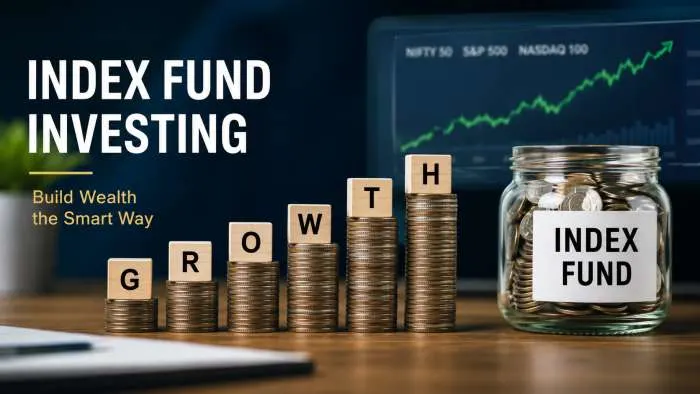
Index fund investing is a way to put your money into a big basket of stocks that follows a famous market list, like the Nifty 50 or S&P 500. Instead of trying to pick winning stocks, you buy a small piece of many companies at once. This method is easy, costs less, and has helped people grow their money over time. The S&P 500 has given average yearly returns of about 10.2% since 1965 . You don't need to be an expert to start. Just pick a fund, put money in regularly, and let the market do the work. It's like buying the whole market instead of just one company.
What is Index Fund Investing and How Does It Work?
Index fund investing is a smart and simple way to grow your wealth. It involves buying a fund that copies the performance of a market index, like the Nifty 50 or the S&P 500. Instead of trying to beat the market, index funds aim to be the market. They hold the same stocks in the same amounts as the index they track.
The Simple Idea Behind Index Fund Investing
Think of an index as a shopping list of top companies. An index fund buys all the items on that list. If a company does well, the index does well, and so does your fund. If the market goes down, your fund will dip, but it also rises when the market recovers. This is why index fund investing is called "passive." The fund manager doesn't pick stocks; the index does the picking for them . This means you don't have to research companies or time the market. You simply ride the waves of the overall economy.
Why Choose Index Fund Investing?
Many people choose index fund investing because it removes the stress of picking individual stocks. It’s a proven way to build wealth over the long run. When you invest this way, you own a tiny piece of all the companies in the index. This gives you instant variety, which is safer than putting all your money in one place. Index fund investing is also very cheap. Since you don't need a team of expensive experts to manage your money, the fees are much lower than other funds .
Tracking the Market, Not Beating It
The main goal of an index fund is to match the market, not beat it. This might sound like you are settling for less. But history shows that most experts who try to beat the market fail to do so over time. By simply matching the market, you are already doing better than many professionals. This is the real power of index fund investing. It relies on the simple truth that markets tend to grow over long periods. You don't need to be a genius; you just need to be patient.
You may also read :- How to Choose Stocks for Investment in India: Beginner's Guide
Types of Index Funds to Match Your Goals
There are many types of index funds to pick from, each with a different focus. Knowing these types of index funds helps you pick the right one for your goals. You can choose funds that track the whole market, specific sectors, or even other countries. Let's look at the most common types of index funds.
Broad Market Index Funds
Broad market funds aim to capture the entire stock market. For instance, a U.S. total stock market fund includes large, medium, and small companies . This is the ultimate "set it and forget it" choice. It gives you exposure to almost every public company in a country. If you don't know where to start, this is often the best of all types of index funds. It is simple and very diverse.
Market Cap Index Funds
These funds focus on company size. "Market cap" is the total value of a company's stock. There are types of index funds for large companies (like the Nifty 50), mid-sized companies, and small companies . Large-cap funds are stable. Small-cap funds can grow faster but are riskier. You can mix these to build a balanced portfolio.
Sector and International Index Funds
If you believe a specific industry will do well, you can pick a sector fund. This could be a tech fund or a healthcare fund . This is one of the more focused types of index funds. You can also look abroad. International index funds track markets in other countries . This helps you diversify beyond your home country. These types of index funds are great for investors who want a global reach.
| Type of Index Fund | Focus | Best For |
|---|---|---|
| Broad Market | Tracks the entire stock market (e.g., Nifty 500, Total Stock Market). | Beginners seeking maximum diversification. |
| Market Cap | Invests in companies of a specific size (Large, Mid, Small Cap). | Investors wanting to target growth or stability. |
| Sector-Based | Focuses on a single industry (e.g., Technology, Banking). | Investors confident in a specific sector's growth. |
| International | Tracks markets outside your home country (e.g., S&P 500, NASDAQ). | Investors seeking global diversification. |
| Bond Index Funds | Tracks fixed-income securities like government or corporate bonds. | Conservative investors seeking stable income. |
Using an Index Fund Investing Calculator
An index fund investing calculator is a free online tool. It helps you estimate how much your money can grow over time. It uses simple math to show the power of compounding returns. These calculators are easy to find on mutual fund websites.
How an Index Fund Investing Calculator Works?
You provide a few details to an index fund investing calculator. You tell it how much you plan to invest each month. You also tell it how long you plan to invest and your expected yearly return. The tool then does the complex math for you. It shows you the total amount you could have at the end. An index fund investing calculator helps you set realistic goals .
Benefits of Planning with a Calculator
Using an index fund investing calculator is a great habit. It turns a big dream, like retirement, into a clear goal. You can see how small monthly amounts can grow into large sums. For example, investing ₹10,000 monthly for 10 years at a 14% return could grow to about ₹26.21 lakh . An index fund investing calculator gives you a clear target. This keeps you motivated and on track. It also helps you decide if you need to save more each month.
How to Invest in Index Funds Without a Broker?
You can learn how to invest in index funds without a broker. Many mutual fund companies sell funds directly to you. You don't need a stockbroker or a trading account. This is a great way to save even more money on fees.
The Direct Route to How to Invest in Index Funds Without a Broker
The simplest way how to invest in index funds without a broker is through the fund company's website. Companies like Vanguard, Fidelity, and others let you open an account directly. You can set up automatic monthly investments, called a systematic investment plan (SIP). This is a key part of how to invest in index funds without a broker. You avoid paying any extra commissions to a middleman .
Index Mutual Funds vs. ETFs
When learning how to invest in index funds without a broker, you will see two main types. One is the traditional index mutual fund. The other is an index Exchange Traded Fund (ETF). An index mutual fund is easy to buy directly from the fund company. Its price is set once a day after the market closes. You don't need a brokerage account to buy it. This is the easiest part of how to invest in index funds without a broker. It feels just like opening a savings account.
Direct Plans Save You More
Companies offer two versions of their funds. Direct plans are for investors buying on their own. Regular plans are for those buying through an advisor. Direct plans have lower fees. When you learn how to invest in index funds without a broker, you should always look for "Direct Plan" or "Direct Growth" options. This keeps more of your money working for you.
Index Funds vs Mutual Funds: The Key Differences
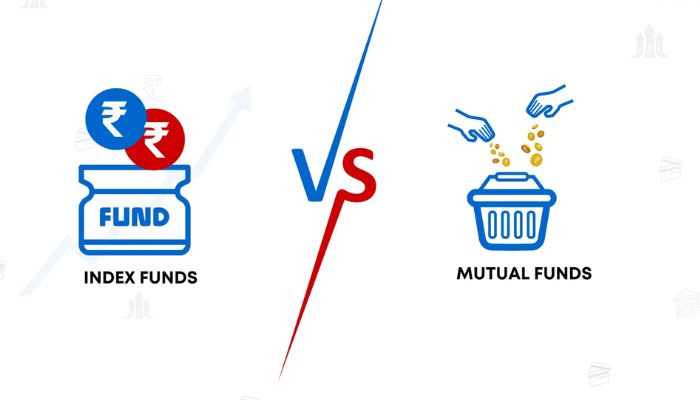
The choice of index funds vs mutual funds is a big one. Both are great, but they work very differently. Understanding index funds vs mutual funds helps you pick the right style. The main difference comes down to active vs. passive management .
The Active vs. Passive Management Debate
In the debate of index funds vs mutual funds, management style is key. Mutual funds are usually active. This means a manager and a team research stocks to pick the winners. Their goal is to beat the market. This costs a lot of money, which comes out of your returns. In the battle of index funds vs mutual funds, active funds have higher fees. They also change their holdings often, which can create tax bills for you .
Costs and Performance in Index Funds vs Mutual Funds
This is where the choice of index funds vs mutual funds is clearest. Index funds have very low fees. They simply follow an index. They don't need research teams. In the comparison of index funds vs mutual funds, the cost difference is huge. An index fund might charge 0.03% a year. An active mutual fund could charge 1.0% or more . Over 30 years, those fees add up. Also, most active managers fail to beat their index over a long period. This makes passive index funds a smarter choice for many .
| Feature | Index Fund (Passive) | Mutual Fund (Active) |
|---|---|---|
| Management Style | Tracks a market index automatically . | A manager actively picks stocks to beat the market . |
| Goal | Match the market returns. | Outperform the market. |
| Fees | Very low expense ratio (e.g., 0.03% - 0.5%) . | Higher expense ratio (e.g., 1.0% - 2.5%) . |
| Performance | Matches the market's performance. | Aims to beat the market, but often fails to do so consistently. |
| Risk | Market risk; follows the general market. | Fund manager risk; poor decisions can hurt returns. |
Getting Started with Index Fund Investing
Starting is easier than you think. You don't need a lot of money. You just need a plan and some patience. Here is a simple guide to begin your journey.
Step 1: Pick the Right Fund
Look for a fund with very low fees. The expense ratio is the yearly fee. Find a fund with an expense ratio below 0.2%. Choose a broad market index fund, like one tracking the Nifty 50 or the S&P 500. This gives you the best start. You can always add other types of index funds later.
Step 2: Decide How Much to Invest
Decide on a monthly amount you can stick to. It could be just ₹500 or ₹5,000. The amount matters less than the habit. Use an index fund investing calculator to see how your monthly amount can grow. The key is to start now. Time in the market is more important than timing the market.
Step 3: Choose a Platform
You can learn how to invest in index funds without a broker by going directly to a fund house's website. This is often the cheapest way. You can also use a trusted investment app. These apps make the process very simple. They let you choose a fund and set up a SIP in just a few minutes.
Expert Insight
"Index funds remove the need to do investment research and diversify your exposure instead of relying on one company's performance."
"Index funds are a great way to create long-term wealth, and that's even true with seemingly boring index funds, like those that track the S&P 500. In fact, the S&P 500 has delivered 10.2% annualized total returns since 1965." - Matt Frankel, CFP
Final Thoughts on Index Fund Investing
Index fund investing is one of the best things you can do for your financial future. It is simple, low-cost, and effective. You don't need to be a stock market expert. You don't need to stress over which stocks to buy. By simply buying the whole market, you put yourself on a path to steady, long-term growth. Start small, be consistent, and be patient. The power of compounding will do the heavy lifting. Begin your index fund investing journey today and watch your money grow over time.
Common Questions and Smart Answers
1. Is index fund investing safe?
No investment is 100% safe. Index fund investing carries market risk. This means your value can go down if the whole market drops. However, because it's so diverse, it's less risky than owning a single stock. Over long periods (10+ years), the market has always gone up. This makes index fund investing one of the safest ways to grow money for long-term goals.
2. Can I lose money in an index fund?
Yes, you can lose money in the short term. If the market crashes, your fund's value will drop. However, you only lose money for real if you sell your shares when prices are low. The key to index fund investing is to hold on through the bad times. History shows that markets recover and reach new highs. Staying invested is the best strategy.
3. Are index funds better than mutual funds?
For most people, yes. The lower fees alone give index funds a big advantage. In the choice of index funds vs mutual funds, the data is clear. Most active mutual funds cannot beat their benchmark index over 10-15 years. With index funds, you get the market's return. You also pay far less in fees. This makes index funds the better choice for the majority of investors.
4. How do I start investing in an index fund?
Starting is easy. First, decide on a fund that tracks a major index like the Nifty 50. Next, find a platform. You can go direct to the fund company. Or you can use a trusted investment app. Then, decide on a monthly amount. Set up a Systematic Investment Plan (SIP). This automatically transfers money from your bank to the fund every month. That's all it takes to begin index fund investing.

 in India.webp)