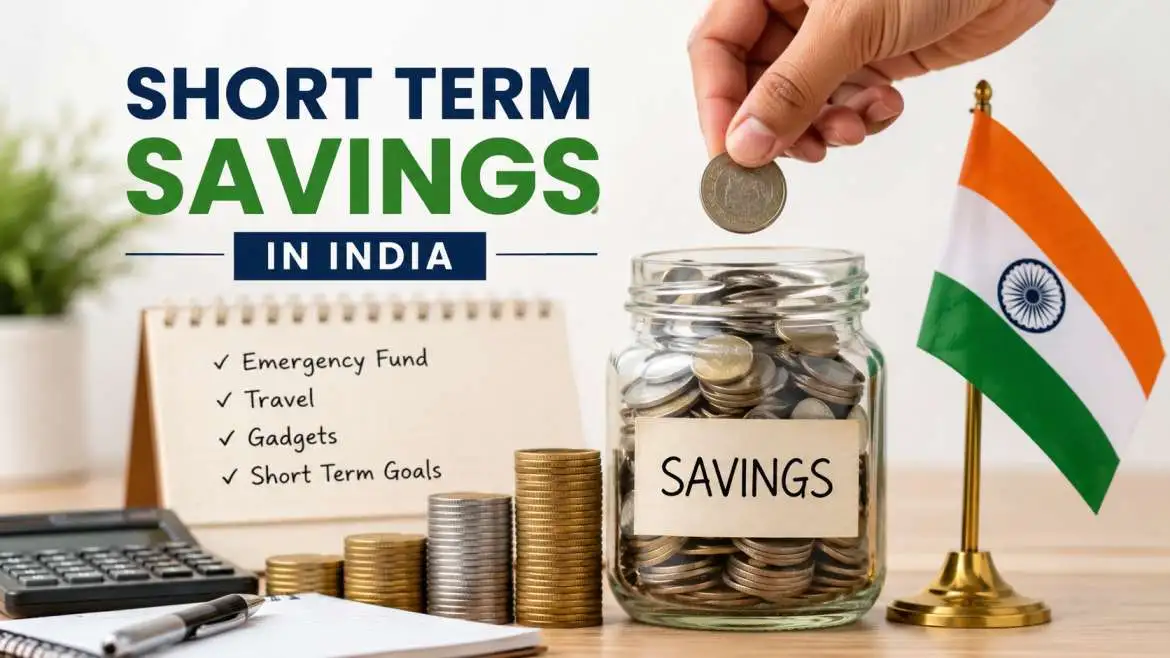
Finding the best options for short term savings in India means looking for high safety, quick access, and better returns than a regular bank account. If you need your money within a few months to three years, the top choices are liquid mutual funds, ultra-short duration funds, recurring deposits, and high-yield savings accounts. These options protect your cash from market drops while helping you grow your money for quick goals like vacations or emergency funds.
Why Short Term Savings Matter Today
Many people focus only on long-term investments like stocks or retirement funds. But life happens in the short term. You might need cash next month for a wedding, a medical emergency, or a down payment on a car.
Leaving all your cash in a basic savings account is a mistake because inflation eats away your purchasing power. On the other hand, putting short-term money into the stock market is too risky. If the market crashes right when you need to withdraw the money, you lose your capital.
That is why smart financial planning requires a dedicated strategy for your short-term goals. You want your money to work for you without putting it at risk.
You may also read :- Best Government Saving Schemes 2026: High Return and Safe
Smart Strategies for Short Term Savings Goals in India

When you plan for short term savings goals in India, you need to match your timeline with the right financial product.
Look at Your Exact Timeline
If you need the money in less than six months, choose extreme safety and high liquidity. Liquid funds or fixed deposits with no lock-in periods work best here. For a timeline of one to three years, you can look at short-duration debt funds or banking and PSU funds to get slightly higher returns.
Focus on Capital Preservation
The main goal of short-term investing is not to double your money. The goal is to keep your money safe so it is completely available when you need it. Do not chase high interest rates from unverified or risky cooperative banks. Stick to large, well-regulated institutions.
Top Low Risk Financial Options for Quick Cash
India offers several excellent financial instruments designed specifically for short-term holding periods. Here are the best places to park your cash safely.
1. Liquid Mutual Funds
Liquid funds invest in safe, short-term debt instruments like government bills and certificates of deposit. They are highly secure and allow you to withdraw your money within 24 hours on business days. They usually offer better returns than standard bank accounts.
2. High Yield Savings Accounts
Some new-age private banks and small finance banks offer high interest rates on savings accounts if you maintain a certain balance. This gives you 100% instant access to your money while earning competitive interest.
3. Fixed Deposits (FDs) and Recurring Deposits (RDs)
Bank FDs and RDs are traditional favorites for a reason. They offer guaranteed returns. You can book an FD for as short as 7 days or up to a few years. RDs are perfect if you want to save a fixed amount of money every month from your salary.
Comparing Your Best Short Term Options
| Investment Option | Risk Level | Typical Timeline | Liquidity |
| Liquid Funds | Very Low | 1 to 90 Days | High (24 Hours) |
| High Interest Savings | Low | Instant | Immediate |
| Short Term FDs | None | 7 Days to 1 Year | Medium (Premature penalty may apply) |
| Ultra Short Duration Funds | Low | 3 to 6 Months | High (1-2 Days) |
Tax Implications You Must Know

Your net returns depend heavily on how the Indian government taxes your investment growth. You must factor this into your decision.
Fixed Deposit Tax Rules
The interest you earn from bank FDs and RDs is fully taxable. The bank adds this interest directly to your regular income. You pay tax on it based on your personal income tax slab. If your interest income exceeds forty thousand rupees in a year, the bank also deducts Tax Deducted at Source (TDS).
Debt Mutual Fund Tax Rules
The rules for debt mutual funds changed recently. Now, all capital gains from debt funds are treated as short-term capital gains, regardless of how long you hold them. The gains are added to your taxable income and taxed at your applicable income tax slab rate.
Common Mistakes to Avoid with Short Term Money
People often make classic errors when trying to optimize their quick-access cash reserves.
- Chasing high returns in risky assets: Never put your emergency fund into small-cap stocks or crypto assets just because they are booming.
- Ignoring exit loads and penalties: Some funds charge a fee if you withdraw money within a few days. Always check the fine print before depositing your cash.
- Forgetting about inflation: Keeping too much cash in physical form or in a zero-interest current account causes your wealth to shrink over time.
Expert Tips for Managing Your Cash
"The golden rule of short-term money management is to prioritize absolute liquidity over maximum yield. A high return means nothing if your funds are locked when an emergency strikes."
To get the most out of your money, use automated transfers. Set up an automatic sweep-in facility on your savings account. This feature automatically moves excess cash into a fixed deposit to earn higher interest, but pulls it back instantly if your account balance runs low.
Helpful FAQs
What is the safest option for short term savings in India?
Bank fixed deposits with large public or private sector banks are considered the safest option. The Deposit Insurance and Credit Guarantee Corporation (DICGC) insures bank deposits up to five lakh rupees per bank per individual.
Can I lose money in a liquid mutual fund?
While the risk is extremely low, liquid funds are market-linked instruments and are not 100% risk-free. However, because they invest in top-tier government securities and short-term commercial paper, actual capital loss is incredibly rare.
Are short term savings goals in India different from long term goals?
Yes, short-term goals focus entirely on capital safety and fast withdrawal access. Long-term goals focus on capital growth and beating inflation, which allows you to take higher risks in equity markets.
Is a recurring deposit better than a fixed deposit?
An RD is better if you want to invest a small portion of your monthly income systematically. An FD is better if you already have a lump sum amount of cash that you want to park safely all at once.
 in India.webp)